NORA NARANJO-MORSE
BACKSTORY
I purchased this abstract sculpture by Santa Clara Pueblo artist Nora Naranjo-Morse from a gallery in Santa Fe, New Mexico, the world-famous Native American art hub.
When I reached out to Nora with questions about this piece, her candid reply shocked me: She was sure no one would be interested in it because she thought it wasn’t ‘Native American’ enough! She went on to explain how this piece represented a major turning point in her journey as a contemporary artist, opening my eyes to the artistic and ethical challenges indigenous artists face.
REDEFINING TRADITION
WLM=Walter L Meyer
NNM=Nora Naranjo-Morse
WLM I imagine you come from a long line of potters, Nora.
NNM Well, my mother was a potter. Her grandmother (who raised her) was a potter. I would imagine there's a long line of potters because Pueblo people have been working with clay for centuries. It was primarily used for utilitarian and ceremonial purposes. Now it's more of an art form, more decorative.
WLM I understand your involvement with clay began when you were very young.
NNM Yes, one of my first memories is going to gather clay with my mother. I hated it because it was so much work and when you're a kid you just want to have fun. However, what that taught me was some really important values about the relationship Pueblo people have with clay. And it taught me about responsibility and respect. And the fundamental views Pueblo people have about working with clay.
WLM Can you expand a bit about those views?
NNM Pueblo people believe we come out of the earth. That we are a part of it. We're no better than it. We’re just a part of this whole cycle of the cosmos, and of everything surrounding us. Everything we see. The mountains, everything. And because of that, I think there was a real worldview about how we respect all of these things. Animals, everything. We respect this gift that we've been given.
WLM Did you hear creation stories, too, when you were young?
NNM There's this one story in the Pueblo world where a young man—a ‘jar boy’—is created from a human girl and clay. As the young girl is mixing clay for her mother, it crawls up her leg and impregnates her. She has this ‘jar baby,’ that’s loved by everyone in the community. At one point he goes to gather clay and wood from the canyon with his grandfather. Because he’s an empty jar! Though he’s told to sit still, he’s naughty. Before you know it, he rolls down the hill, and hits a boulder. When the grandfather finds him, he's a human boy! That really speaks to the idea that we come from this earth.
WLM That story illustrates the importance of vessels in Pueblo culture, too.
NNM Vessels are also symbolic. What's carried in a vessel? So many things—memories, water, food. Of course, from family to Pueblo family, there are different narratives. But it's basically this one thought about where we come from. What we hold in ourselves. I view that process of breaking open as an evolution of what we can become.
WLM Is Pueblo pottery-making exclusively a woman’s world?
NNM When I was growing up, it was shared labor. But the women were kind of in charge, in my household anyway. My mother was the queen of her domain. But it was a community activity. I remember getting in a car with my older brothers, shovels, and buckets. My father would drive us, and we'd start gathering clay. The men were in charge of the heavy lifting. We were in charge of sifting and mixing the clay.
WLM Was your father only involved in the manual labor part of this endeavor?
NNM Not at all. Sometimes late in the evening, he would design pottery for my mother because he had a very steady hand. So, depending on the design, he’d carve some of the pieces of pottery or paint on them. It was a collaboration agreed upon by my mother and father. There are men in our community who make beautiful pottery today.
WLM Can you talk about the history of pottery sales in the Southwest?
NNM The commodification of Pueblo culture has a long history. Especially when I was growing up, someone else—a tour guide or a trading post owner—would suggest what pottery would sell. At that point the pieces were no longer utilitarian or ceremonial. They were mainly to sell to tourists. I remember going with my mother to a trading post in town to sell some of her vessels. The owner would examine them carefully. If they fit his standard of what might sell, he’d purchase them.
WLM You told me about an interesting change in your mother’s demeanor at those times that affected you for years.
NNM My mother would be chatty as we walked to that trading post. But the minute we walked through the door and saw the owner standing behind the counter, she became very quiet. As I thought about it later in my life, there was a real power shift. My mother was no longer the person who had the knowledge. She was handing it over to someone who didn't even really talk to us. Someone who just wanted this vessel to meet his level of what he thought a good piece of Pueblo pottery was.
WLM Did the time of year determine the prices your mother received for her creations?
NNM Definitely. How much depended on the season. If it was winter, she’d get less than if it was summer. That’s when the tourists came, and the trading post owner would be able to sell her work for more money.
WLM Would you explain how the kosa played an important role in Pueblo village life during your childhood?
NNM Sure, they were considered supernatural, religious beings. On special occasions, men dressed in blue-and-white stripes and with corn husks shooting out of their heads entered our village. As I understood it, they came to remind people of their human foibles. To make fun of us, to ground us to our humanity. Maybe even to make us laugh during hard times.
WLM I understand that for a long time you primarily made clay kosa figurines, right?
NNM Yeah, they represented such a big part of my youth. As children, we feared them because they would come and check to see if we were being good kids. They really meant something to me on a personal level. Making them, I really didn't feel like I was being disrespectful or taking a religious icon and commodifying it. I was just learning how to work with clay in a completely different way from making vessels.
WLM Looking now at your sculpture in my collection, I wonder if those kosa influenced its creation, too.
NNM You know, they probably did! That's what's so wonderful about making art. I'm always drawing from different resources. I may not even be conscious of where those sources are from. It's so much in my DNA. I may have gone to a feast day at Taos Pueblo, seen the kosa, and unbeknownst to me, their influence became manifested in the sculpture’s two towers.
WLM I understand making this sculpture marked a major turning point in your artist practice.
NNM Yes! When I made it, I was really becoming braver about my creative trajectory. I had changed from my mother's way of viewing pottery—that clay, if you were a Pueblo woman, needed to be made into a certain type of vessel. But when I started realizing that wasn't the case, I started exploring the possibilities.
WLM So you wanted to expand your horizons, so to speak.
NNM Absolutely. If you have other-worldly creatures as a part of your youth—and if you’re somebody like me—you want to explore what else is possible to create. There are no limitations. But that was very worrisome for me for a while. I didn't really fit into the paradigm of a Pueblo woman, as a clay worker who made beautiful vessels
WLM How did your perspective expand?
NNM I was going to museums. Starting to travel a little bit more, and looking at people like Henry Moore and Giacometti. All of these resources were becoming more and more available to me through reading, films and listening to people talk. And it wasn't just visual. It was also the kind of music I was listening to—classical, country and Western. It was an explosion of information that I was just absorbing. In that way I, too, was really a vessel. All of these things were getting put into me at a time when I was ready.
WLM When was this?
NNM The late seventies, eighties. Before that I was pretty limited. I lived in a small town. And there were pretty specific things people listened to, said, ate. And when I realized there was this whole other world, I jumped in. I started making connections. I couldn't resist it or hold it at bay. The creative process basically dictated where I was going—the portal of creativity I was going through.
WLM How did people initially react to your new approach to clay?
NNM It didn’t fit into the paradigm of most of the people who saw it. There’s a real sensibility of reverence, thought, and prayers surrounding clay work. I acknowledge that in my heart. I also acknowledge that I live in this time period. I was influenced by so many things. I just couldn’t deny that.
WLM Where did you first show ‘my’ piece?
NNM At an exhibition at the Addison Gallery in Santa Fe during Indian Market. This work was more sculptural, not a vessel with traditional motifs. I heard someone say, ‘Oh, this looks very phallic.’ That scared me a bit. I thought, oh, I shouldn't be doing that. And then, why did I do that? I started doubting myself. I became very aware of other people's viewpoints and standards concerning what I should be as a woman, as an artist, as a human being. But I realized that wouldn’t benefit my end goal of creating what was coming out of me. I tried to lay that fear to rest.
WLM I’m curious. Did you ever create more work inspired by the kosa?
NNM Yes! During COVID I made Healers from Some Other Place—huge kosa sculptures made from repurposed burlap, plastic and wire. Hatch, New Mexico, The Chili Capital of the World, is about four hours down the road from here. They have lots of burlap bags that I collected before they were thrown out, then washed and dyed. I picked up old fencing wire from our community dump to make the infrastructure.
WLM Finally, what do you think about the position of indigenous artists today?
NNM We live in a completely different world now. It's not a pueblo in the fifties or sixties. I think in general, indigenous people are finding their voice. Which is a beautiful thing. Being more experimental. Expressing who they are now, using long threads of influence.
WLM What about those artists who continue to produce more traditional work?
NNM I'm not saying there aren't people who are maintaining tradition—which is very beautiful and admirable. There are still people looking for traditional pottery.
WLM At the end of the day, how do you see yourself?
NNM I really feel like I'm just an artist. An artist very grateful that I get to walk into my studio every single day and create.
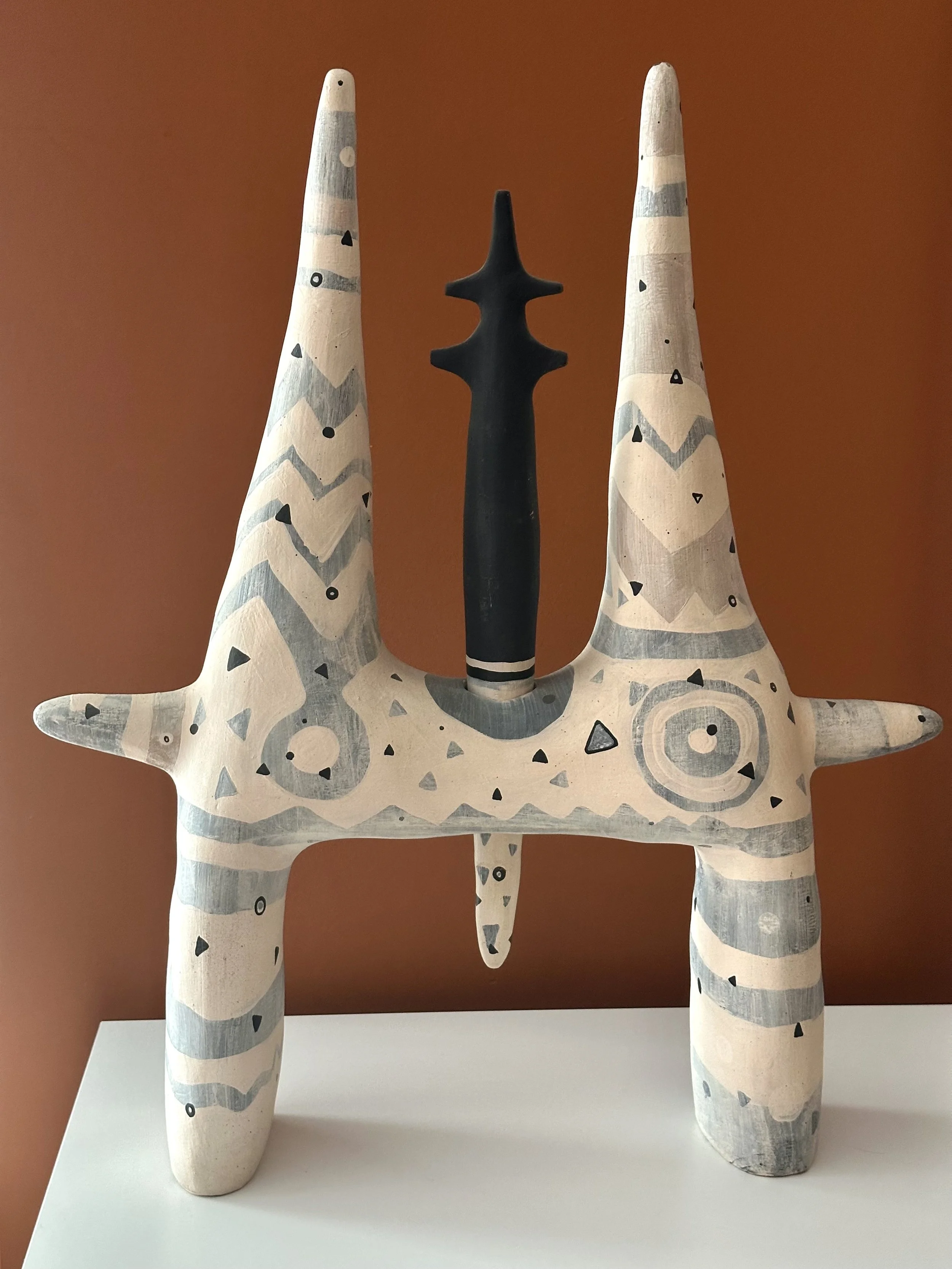
ABSTRACT SCULPTURE
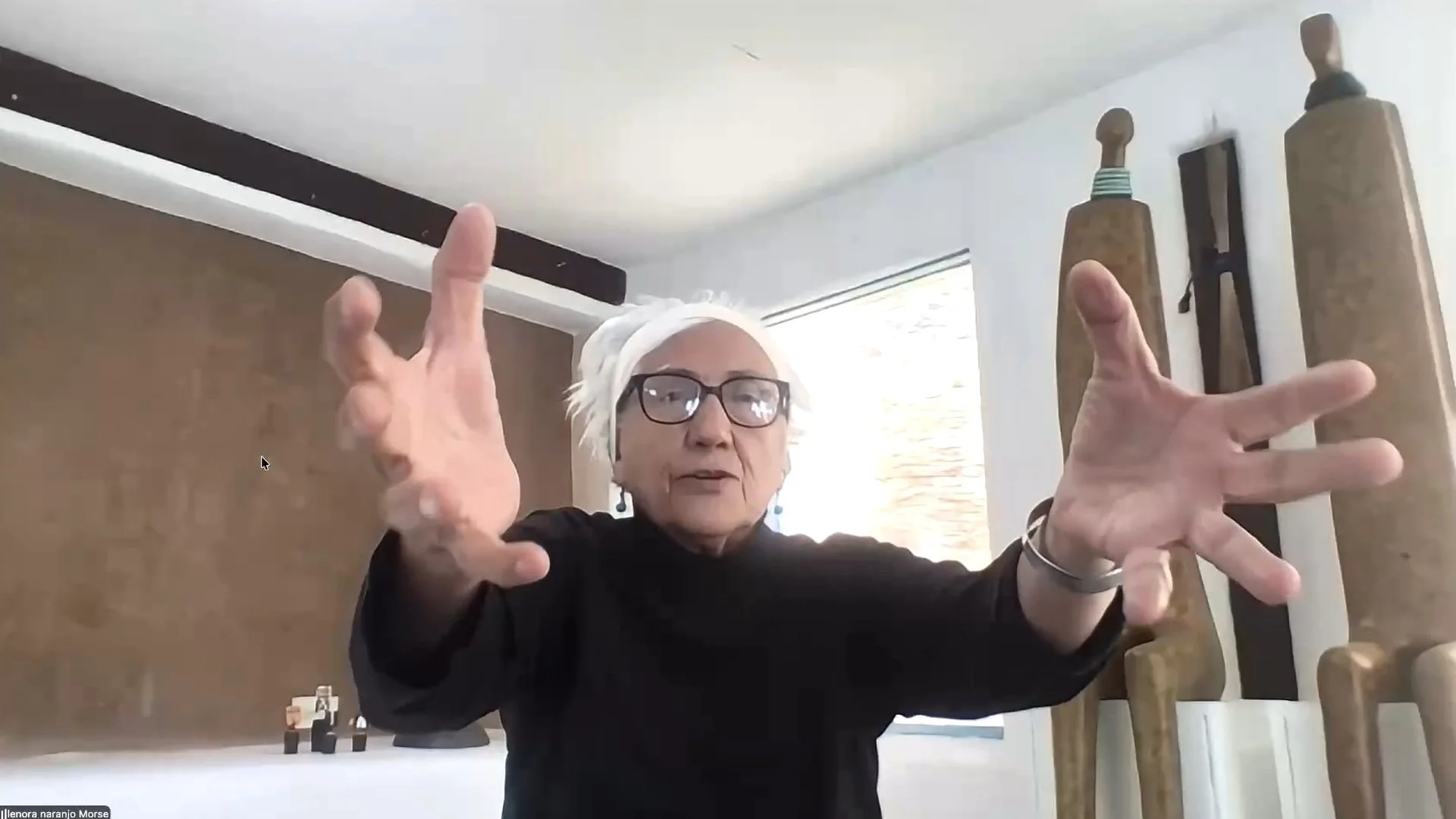
Nora Naranjo-Jones, New Mexico, USA
Pueblo people believe we come out of the earth
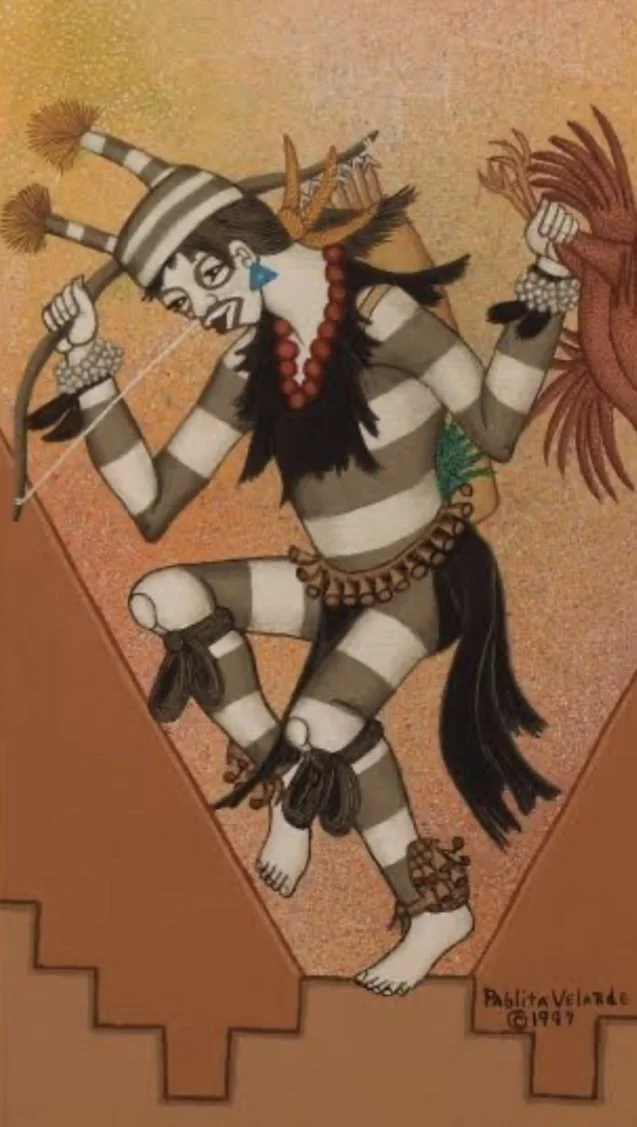
Traditional image of Pueblo kosa
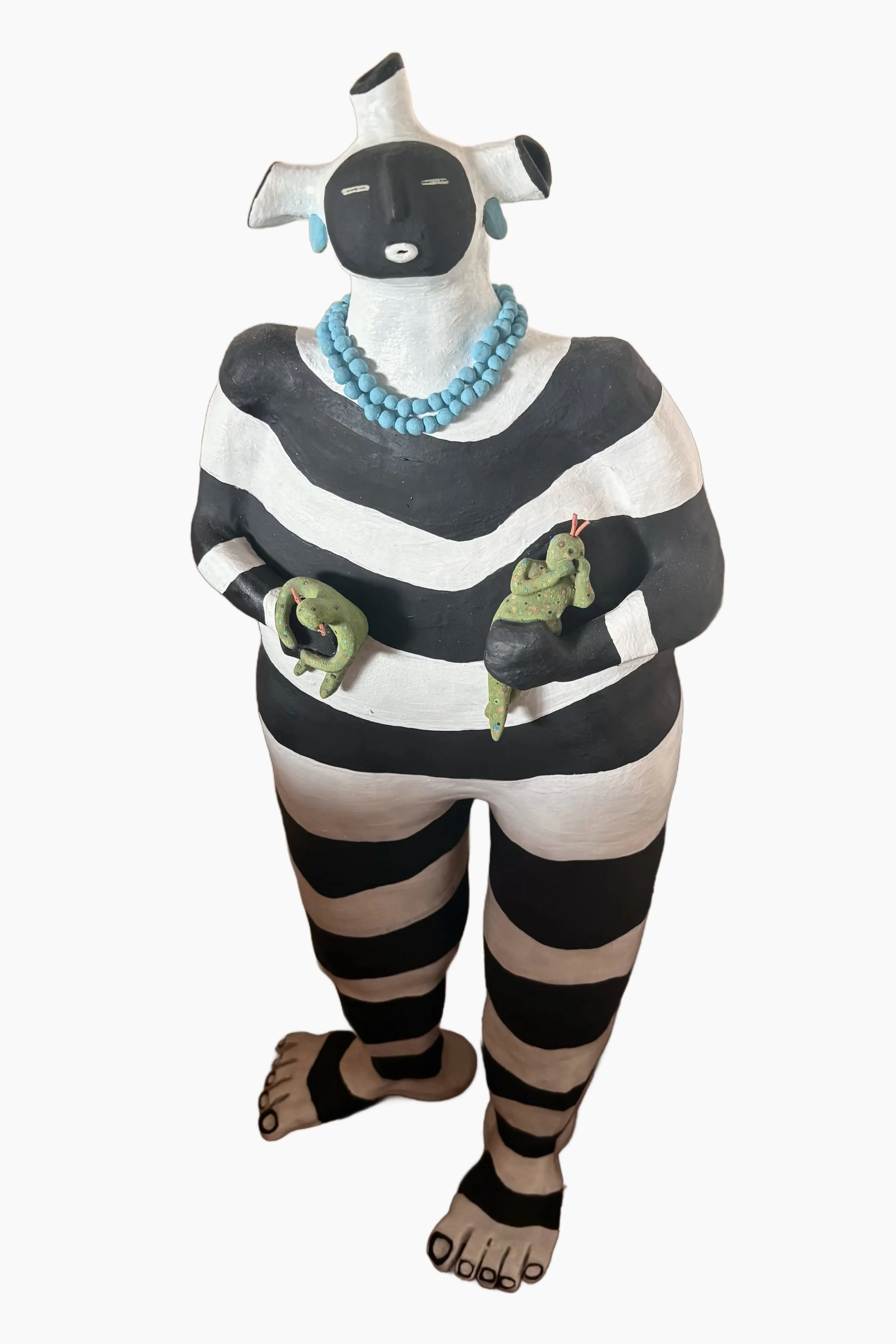
Nora’s earlier ‘traditional’ kosa
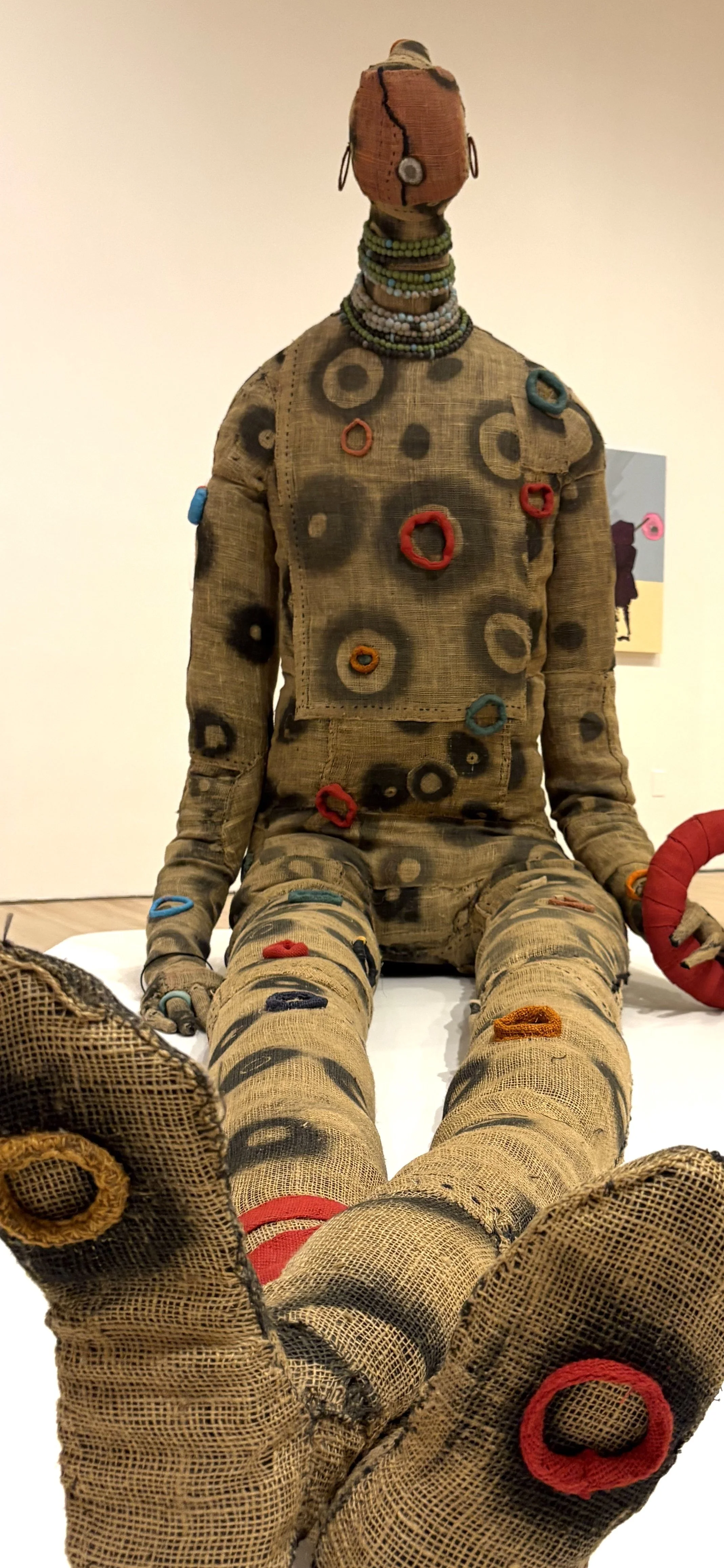
Kosa as re-imagined by Nora