MELINDA STICKNEY-GIBSON
BACKSTORY
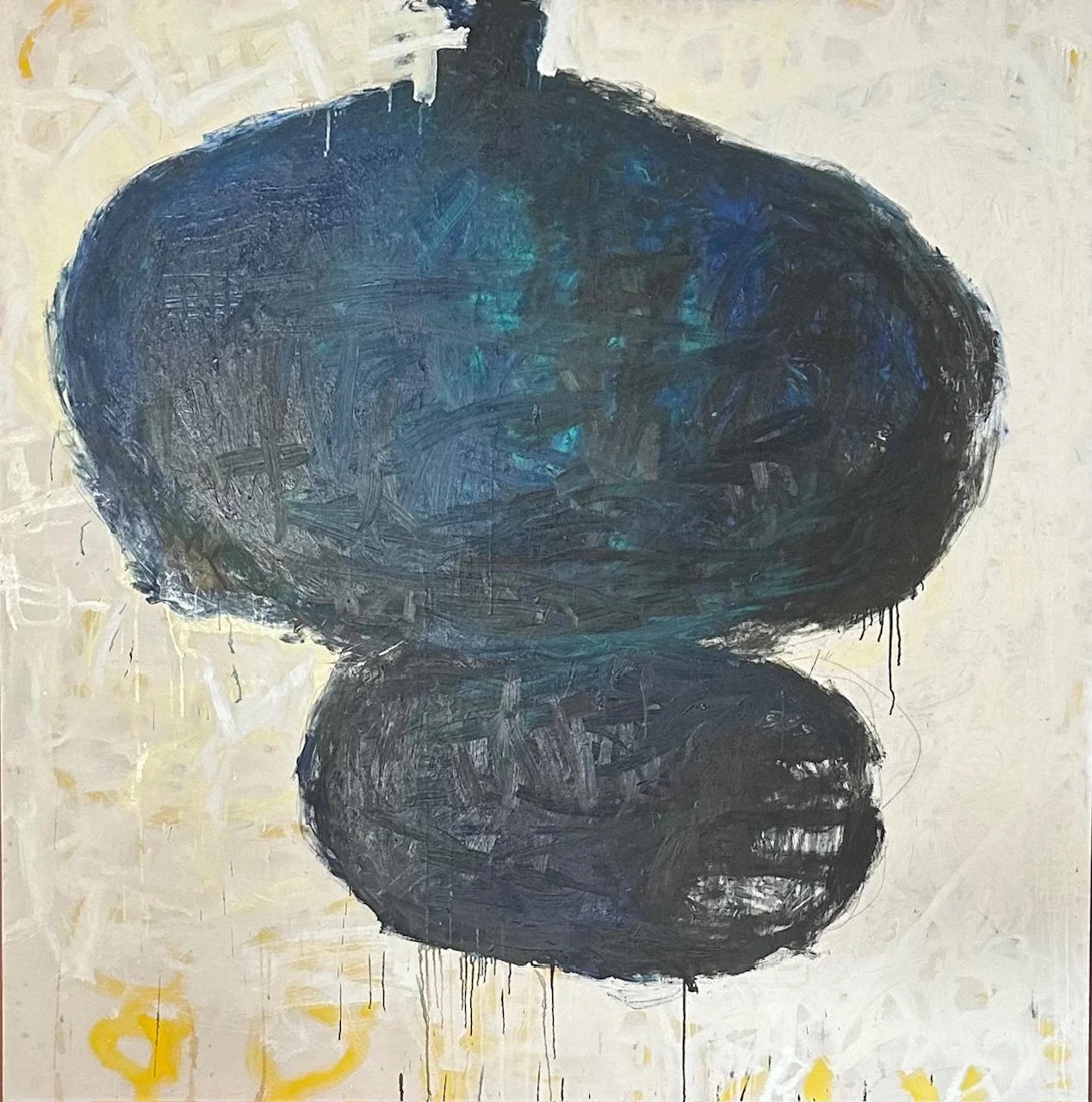
In 2008 I was in search of an appropriate something to congratulate myself for escaping the New York advertising rat race. This powerful painting by Melinda Stickney-Gibson filled the bill.
Its commanding size (178 cm/70” square) grabbed my attention (and subsequently proved challenging during my many moves). But Blue Prayer also said to me, ‘This is what painting is all about.’ Its enigmatic central shape intrigued me, too. Was it simply abstract or did it have a meaning? I think you’ll find Melinda’s explanation surprising and fascinating.
ART AS ARCHAEOLOGY
WLM=Walter L Meyer
MSG=Melinda Stickney-Gibson
WLM Before we get into things, I’m curious. Was there anything else you wanted to be growing up other than an artist?
MSG An archaeologist. Unearthing, digging. Never assuming something is what it first appears to be. I think there's a thread there when you look at how I work.
WLM Melinda, you’ve said you had to unlearn what you learned in art school. What did you mean by that?
MSG When I went to school in the late sixties, I was of a generation where girls went to college because you went. And then got married. So my education wasn't focused on me having an actual career in art. The technical part of painting was important to learn. Color theory and the mechanics. But after that, you weren't encouraged to think for yourself, and create for yourself. It was…the composition has to be this way. You have to approach the painting this way. To this day I have to unlearn every time I approach a painting to get that conversation out of my head. Maybe ‘unlearn’ is too tough a word. I have to empty my mind every time I begin a new work.
WLM What’s your working style? Do you concentrate on one painting at a time?
MSG Actually, I work on about a dozen paintings at the same time—which is why it takes a couple of years to complete a work! One painting misbehaves, so I go to the next one to clear my head. Make room for possibilities. Then I can go back.
WLM On the face of it, I’d describe your work as abstract. Do you?
MSG Actually, for me it's absolutely narrative. When I start a painting, I write on the canvas—little or big marks and words. It doesn't direct the painting, but it sets the tone. It opens the exploration. There’s this language there that only I know is there because it’s painted over.
WLM What determines what you write on the canvas?
MSG It's always the moment I'm in. If I'm looking out the window at nature, then it could be about that. If I'm angry, it could be about that. If I'm in love, it could be about that. It gets me started. Writing on the canvas is a conversation between the painting and me.
WLM Do you start a painting with a specific idea in mind?
MSG No, I don't have a specific idea—like it had better be this way when it’s done. I always make what I call ‘mistakes.’ I leave, come in the next day, and see what I should do. Many times I fundamentally destroy what was there before. Except what was there before is still under there. And feeds what's next. That’s the archaeology of it.
WLM Let’s talk specifically about Blue Prayer. To honest, its paint drips and random marks were an important part of its attraction for me.
MSG Thank you! That's so important to me. I do not want perfection. I think a little flaw makes something alive, and approachable and real. It's sloppy. But it's active. There are mistakes, but intentional mistakes. I don't know how many layers there are of scraping off, moving the form, getting angry and just wiping it all down with turpentine, except for one little section that I really liked. And then building on that.
WLM Was its central voluminous blue shape inspired by something specific?
MSG The famous Venus of Willendorf sculpture! Somehow she’s made it through millennia, and still influences people like me. It isn't exactly based on her, but she was part of the process. I do like that shape.
WLM Why do you always title your paintings?
MSG I know some artists feel a title somehow ‘leads’ the viewer, and I respect that. But for me, a title is an invitation from me to the person looking at it. I believe it makes them pause and look longer than if it were untitled. It gives them a place to reference their own life.
WLM So why Blue Prayer?
MSG I'm sure viewers understand ‘blue’ right away, but maybe not ‘prayer.’ Painting is a kind of spiritual place for me. ‘Prayer’ just felt like the right thing. It was gentle and inviting. Maybe universal. And not threatening.
WLM Is there something you’d like to close with, Melinda?
MSG I don't normally say this to someone who owns one of my paintings, but in my personal opinion, Blue Prayer was one of my most successful paintings.
WLM Then I’m particularly honored to call it mine. Why?
MSG Because of its presence. There was no time where I went: I should have, I could have, I wish I had. Which is why it took two years to do. Let me end by saying that I’m still surprised every day that I have the career I have. And that I get to do what I do.
Blue Prayer
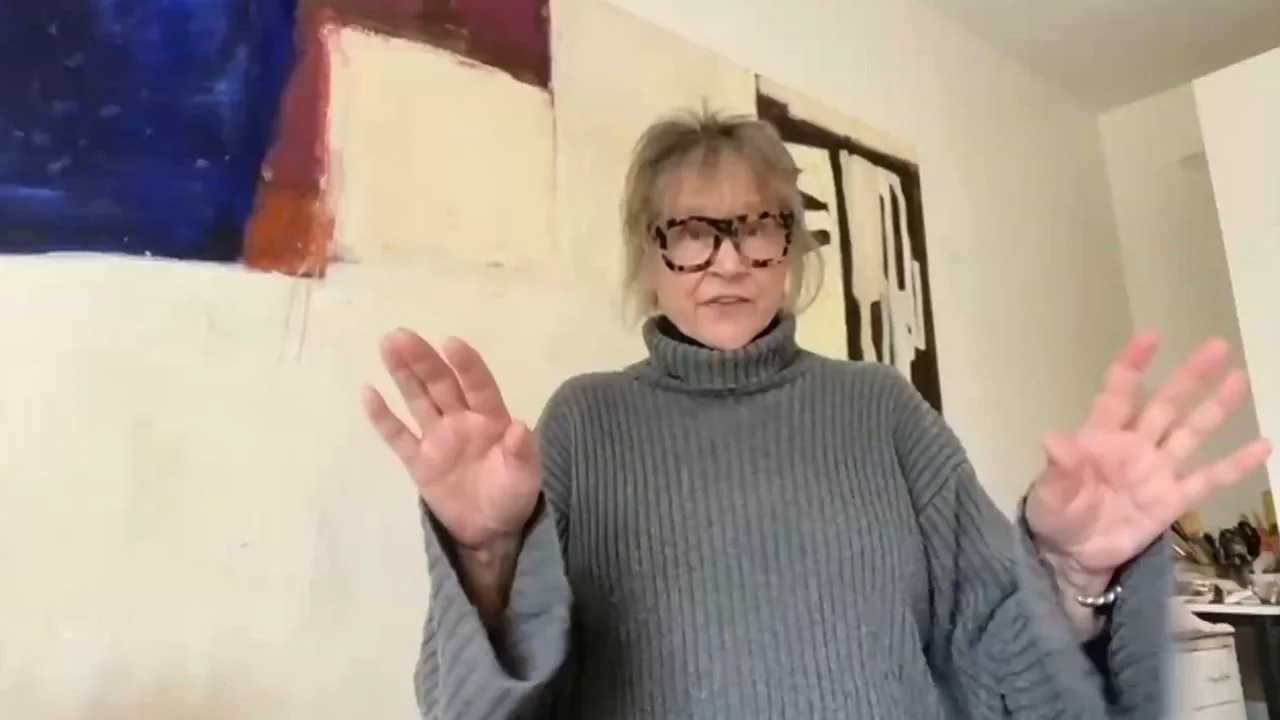
Melinda Stickney-Gibson Illinois, USA
I HAVE TO EMPTY MY MIND
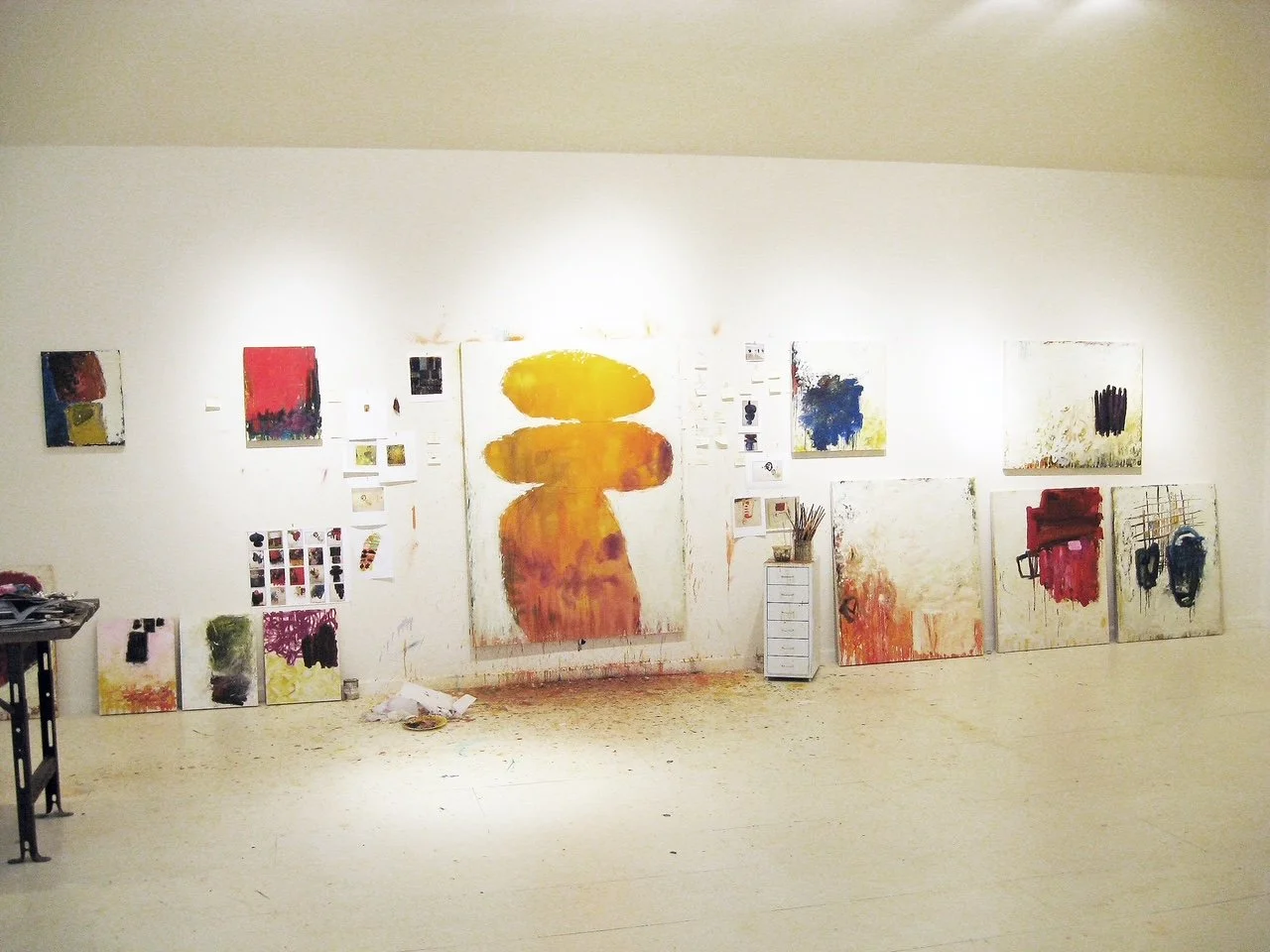
Multiple paintings in progress
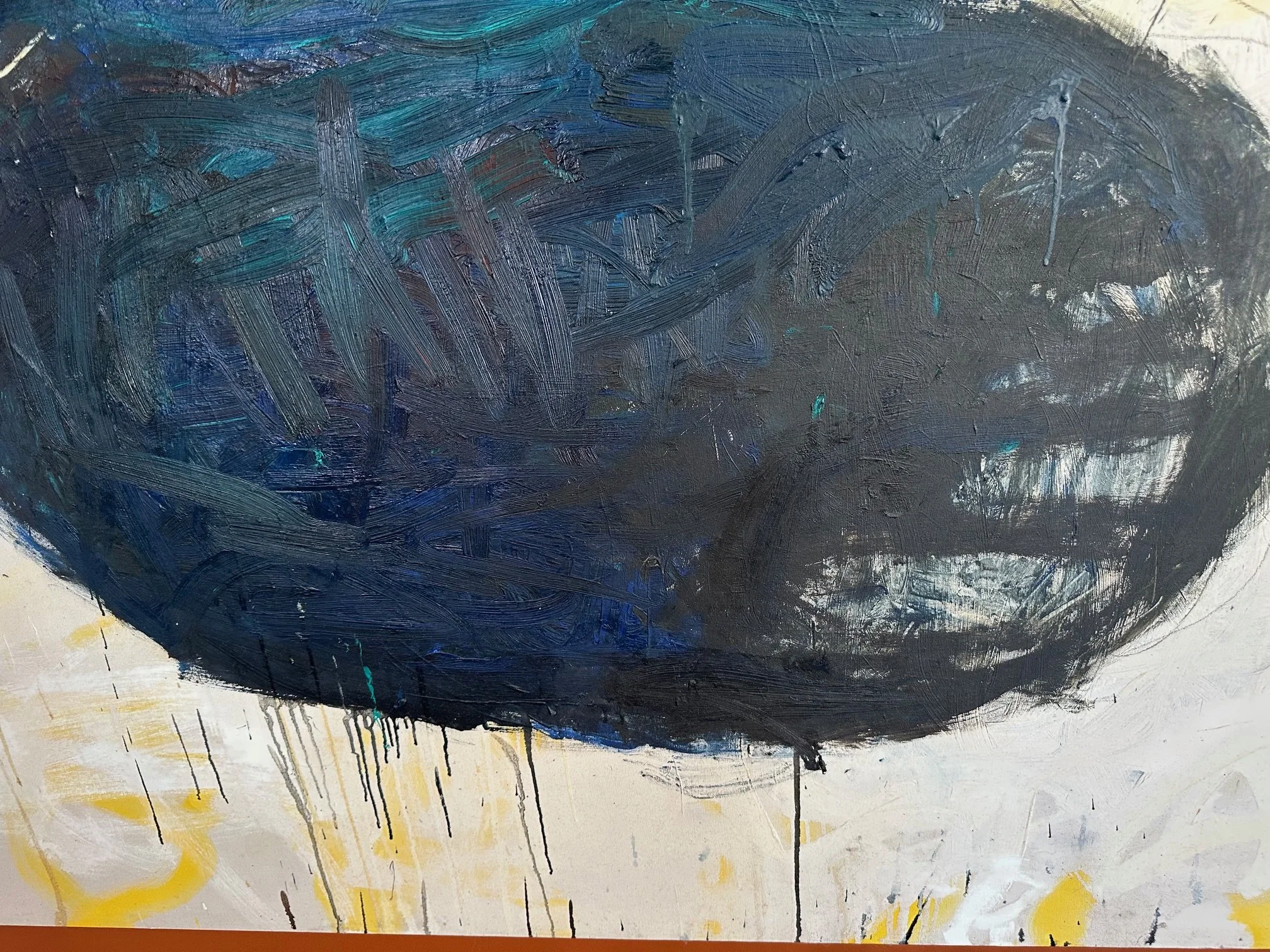
Intentional ‘mistakes’
i do not want perfection
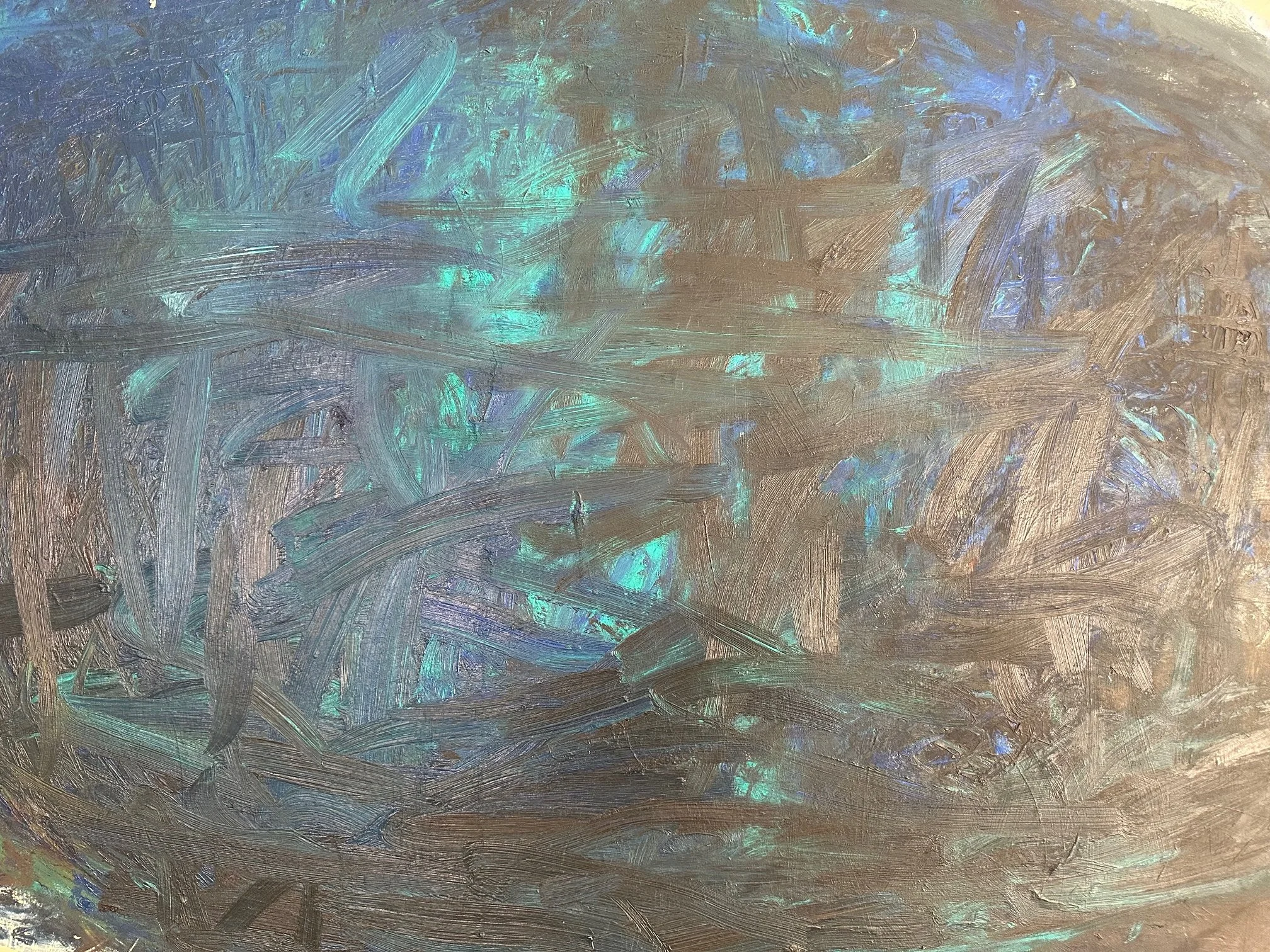
A blue of many colors