NERMIN Yokuş İpekçiler
BACKSTORY
In July 2026, I re-visited one of my favorite places—Gökçeada, Türkiye’s largest island. It’s also the country’s westernmost point. With its Aegean location, the island’s quite close to Greece. Nine villages call Gökçeada home. Scattered throughout the island’s diverse and beautiful landscape, each has its own claim to fame. Dereköy is one of them. I’d read that it has been largely abandoned since the 1960s, so it wasn’t very high on my list of villages to visit.
However, knowing my passionate interest in art, one of the other guests at my hotel suggested I visit Dereköy. Why, I asked. She’d noticed an art gallery there. On further questioning, she confessed she hadn’t actually visited the gallery. Still quite dubious, I set out for Dereköy. One of its many narrow streets finally revealed an art gallery: Dereköy Sanat Evi (Dereköy Art House)—a bright, whitewashed building standing in sharp contrast to its empty and derelict neighbors. Inside I met its founder, artist Nermin Yokuş İpekçiler, who explained to me how Gökçeada has influenced her life and her art.
(This interview has been edited for clarity and length.)
ARTIST BRINGS NEW LIFE TO A ‘GHOST VILLAGE’
Highlighting the dynamic relationship between place and art
WLM=Walter L Meyer
NYİ= Nermin Yokuş İpekçiler
WLM When I visited the village of Dereköy this summer, I was very surprised (to put it mildly)—but delighted—to discover Dereköy Sanat Evi (Dereköy Art House). It’s located in what I can only describe as a ‘ghost village’ consisting mostly of vacant stone houses. Once occupied by their Rum (ethnic Greek) owners, they were deserted in the 1960s due to the political climate at the time. So I’m very curious, why did you select such a seemingly unlikely place to establish your art gallery?
NYİ As you described, Dereköy has a very specific history and memory. Over the years, it became increasingly quiet and isolated. But it still carries many stories from its past. Opening Dereköy Sanat Evi in the summer of 2026 is my way of communicating with that memory through art. I felt art could create a new dialogue with the village and its memory, perhaps infusing it with Gökçeada’s life-affirming energy that I feel all around me.
WLM I immediately felt that energy when I saw the mural opposite your gallery! But I know your life on Gökçeada started many years earlier.
NYİ Yes, I can thank my husband for my relationship with this island. He’s had a vineyard in the village of Şirinköy for many years, and knows the island very well. We started coming together to Gökçeada during grape harvest season. Staying in a small stone house on the property, we worked together in the vineyard. Though we were often exhausted at the end of the day, I remember the nights very clearly—I’d never seen stars so bright and so dense. Being surrounded by nature changed my sense of the rhythm of everyday life. It was a powerful experience.
WLM I’m intrigued. Can you talk more about those early years in the vineyard?
NYİ Life during those years was very simple. We didn’t even have electricity. I was deeply affected by the simplicity of that life. I began to realize how few things I actually needed. I felt a new sense of freedom and tranquility. Gradually, painting began to naturally emerge within that life. In my free time, I started painting grapes on the vineyard walls. Later, I made nature-inspired paintings on wooden panels. Gradually, these works grew into a collection. I didn’t feel I was simply painting. I was responding to a ‘whisper from nature.’ However, when the grape harvest was finished, we’d return to our life in Kuzguncuk, Istanbul.
WLM I was fascinated to learn that the building that now houses Dereköy Sanat Evi had once been your home.
NYİ Yes, that’s right. When we decided in 2018 to spend more time on Gökçeada, we realized the vineyard’s little stone building (though charming) really wouldn’t be adequate for a more lengthy stay. We already owned this building, and were using it for storage. Gradually we decorated it, and it became our home. Over time, this changed our relationship with the village of Dereköy. We began to feel its history and its memories more deeply.
WLM When did you decide to transform your home into Dereköy Sanat Evi?
NYİ In 2022, we moved to another village on the island. That summer, I began transforming the space into an art venue. For about three years, I held private two-week exhibitions here. In the summer of 2026, it officially opened as Dereköy Sanat Evi. I keep it open for the entire six months my husband and I spend on the island (generally May through October).
WLM Let’s focus on your art now. You’ve been creating art – both painting and sculpture – long before coming to Gökçeada, and still maintain an Istanbul studio in Kadıköy’s Yeldeğirmeni neighborhood. How has the island affected or changed your art?
NYİ I do think there is a clear difference between what I create in Istanbul and Gökçeada. My Istanbul work is more focused on identity and the human figure. The work I create on the island is more closely connected to nature, the soil, animals, history, and labor. My island palette is also more colorful. However, I don’t simply depict what I observe on the island; rather, I transform my impressions and experiences through my own artistic language. When I’m in Istanbul, I continue my commissions and other work. The art I produce on the island is exhibited here in Dereköy Sanat Evi.
WLM I’m curious, do you see yourself more as a painter or a sculptor?
NYİ Painting has always been part of my life, although my formal academic training began with sculpture. At a certain point, I wanted to complete my education in painting at an academic level as well. I’ve always found the relationship between these two disciplines interesting. I don’t see painting and sculpture as completely separate practices. Each offers me a different possibility for expression. These days my practice moves between both. It depends on the subject and on the feeling I want to convey.
WLM I’d like to end this fascinating conversation with a question. During my visit to Dereköy Sanat Evi, I was particularly struck by a painting titled Pusula (Compass). At the time, you told that it’s also special to you. Why?
NYİ It’s a visualization of what Gökçeada means to me. While its shape reflects the island’s contours, Pusula is not really a geographical map. Although it contains the island’s roads, valleys and other geographical traces, it conveys so much more. It carries the footprints of everyone who has lived or visited here. Gökçeada is a place that seems to make a change in the lives of all those who come in contact with it. Pusula is a map of that transformation—both of the traces people leave on the island, and the traces Gökçeada leaves on them.
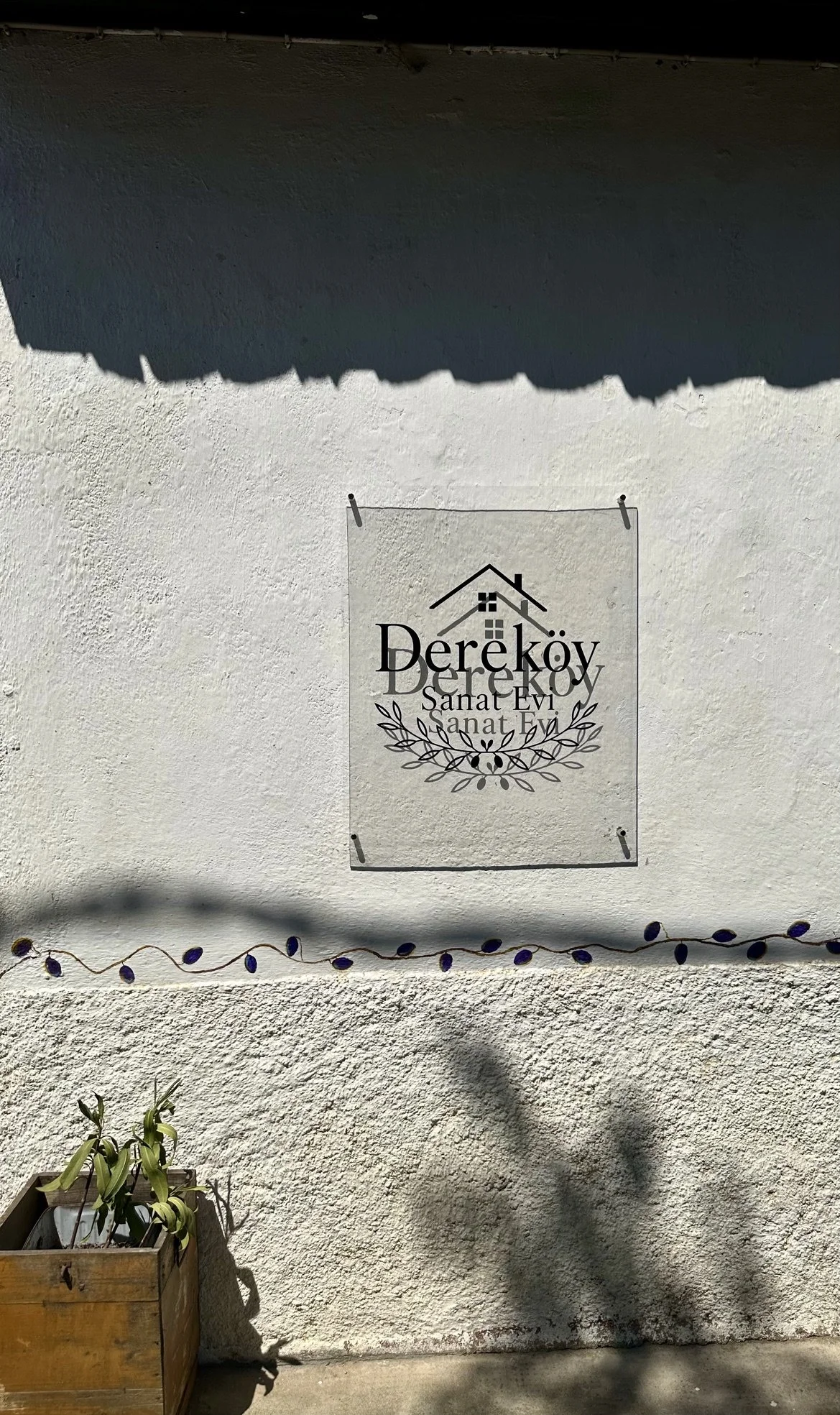
The whitewashed Dereköy Sanat Evi stands in contrast to some of its neighbors
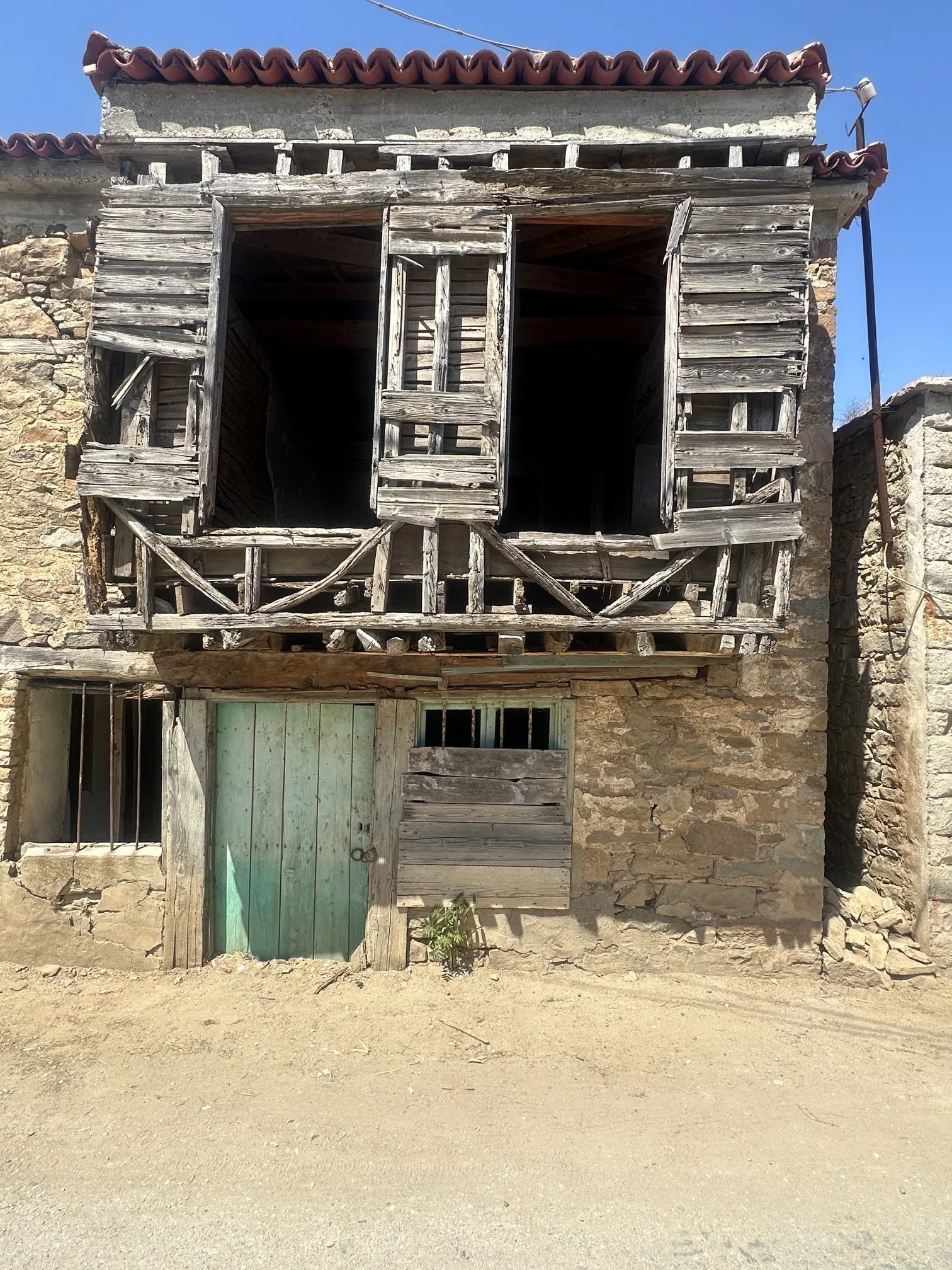
The whitewashed Dereköy Sanat Evi stands in contrast to some of its neighbors
Dereköy has a very specific history and memory
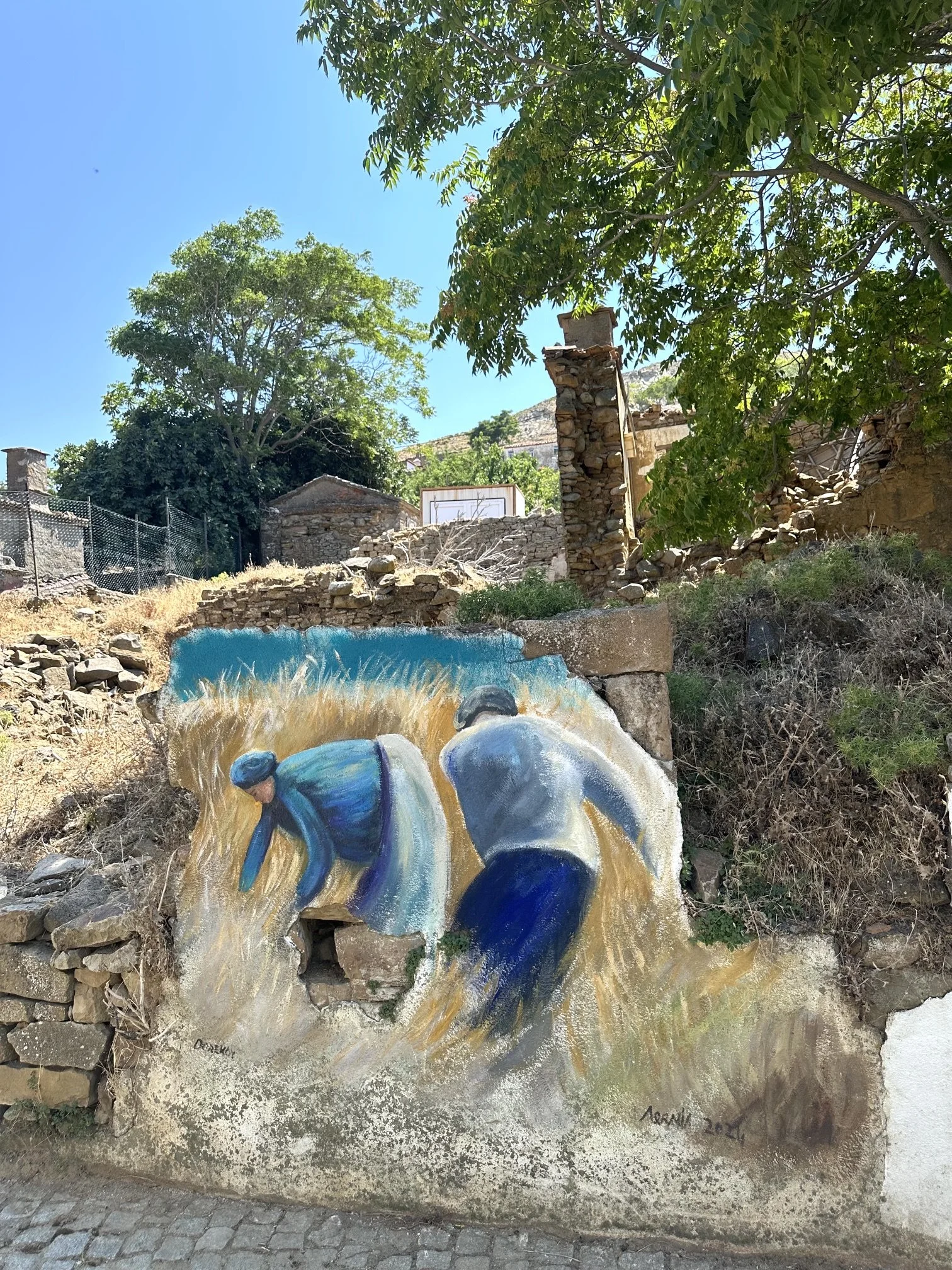
The energy-filled mural opposite the gallery
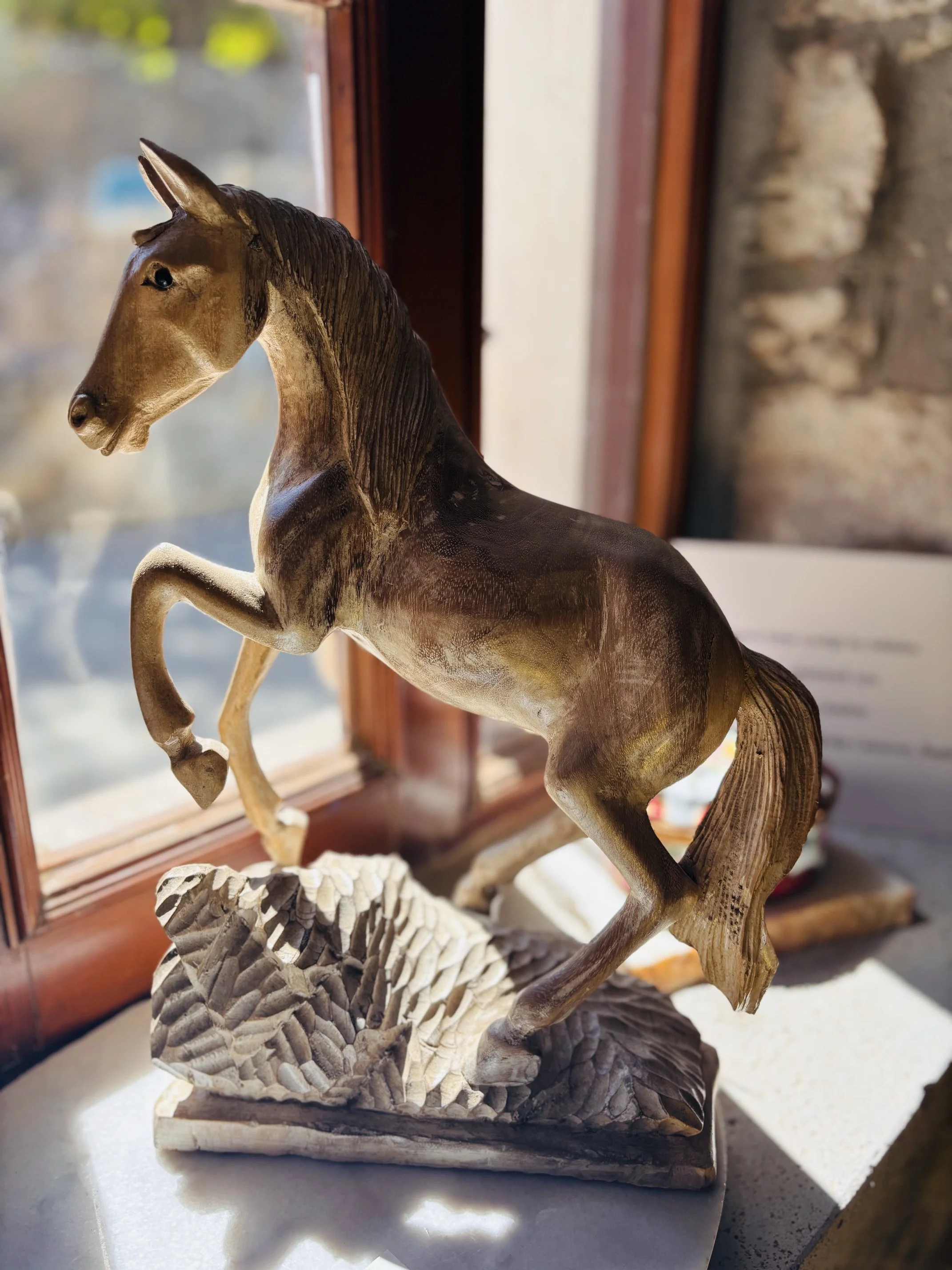
Island Resident (created on the island)
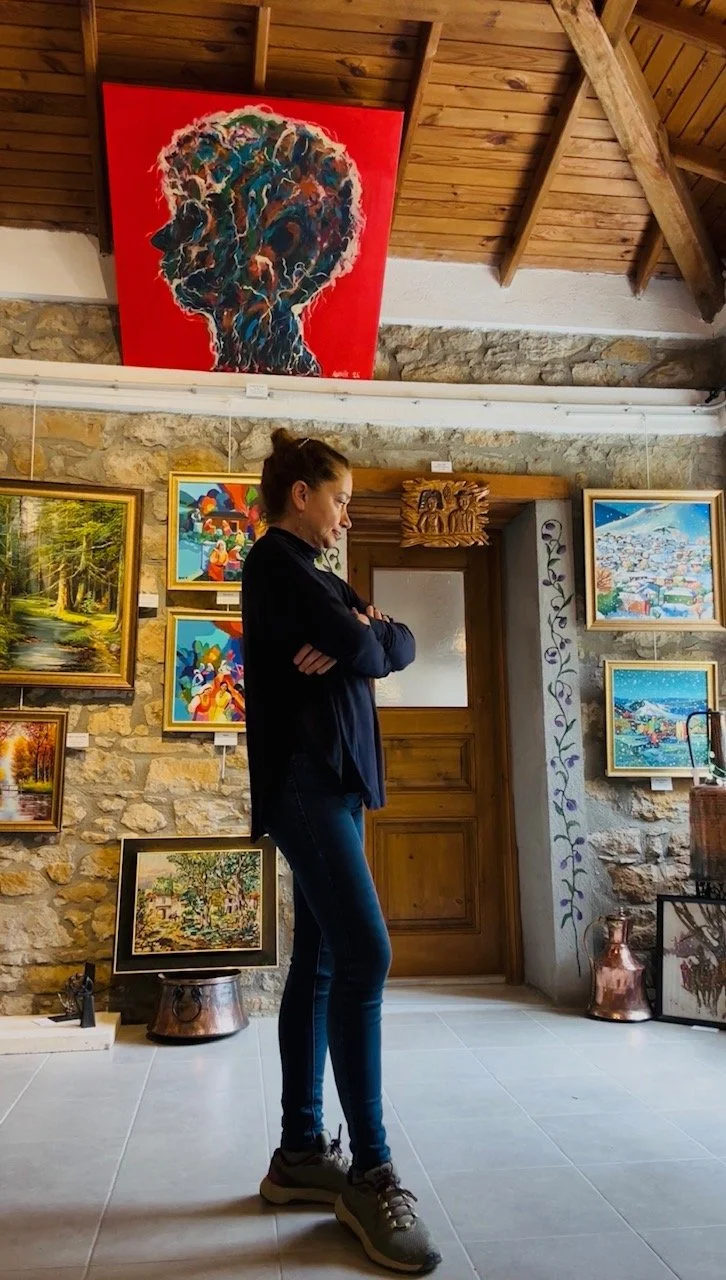
Nermin Yokuş İpekçiler surrounded by her art
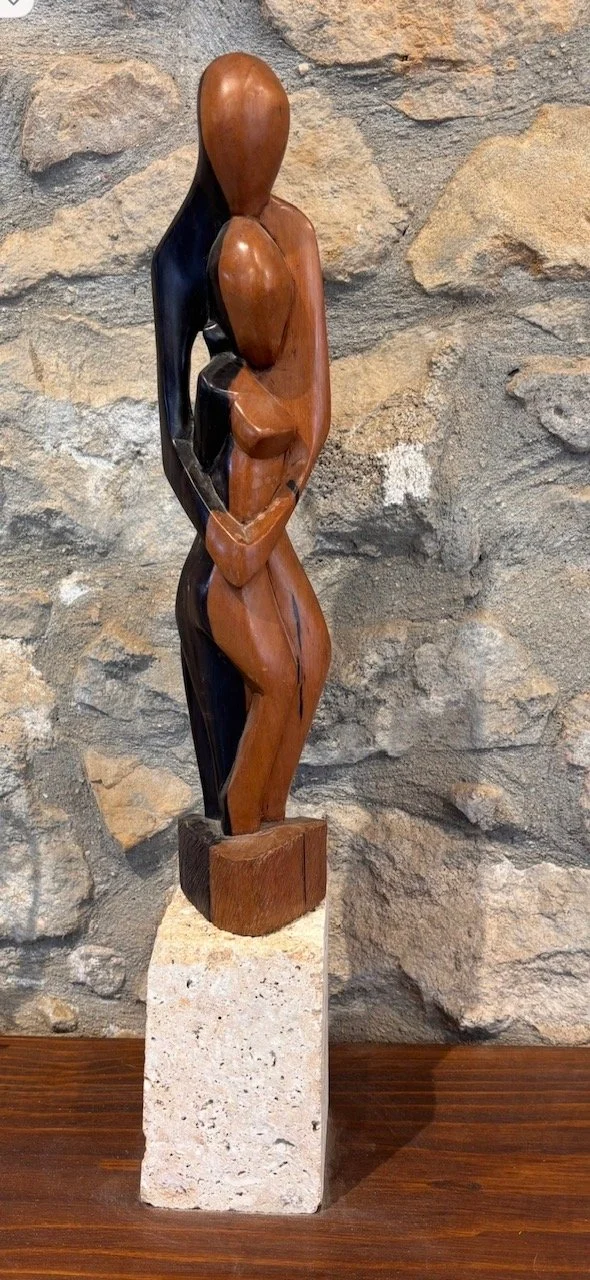
The Longest Distance Between Us (created in Istanbul)
I was responding to a ‘whisper from nature’
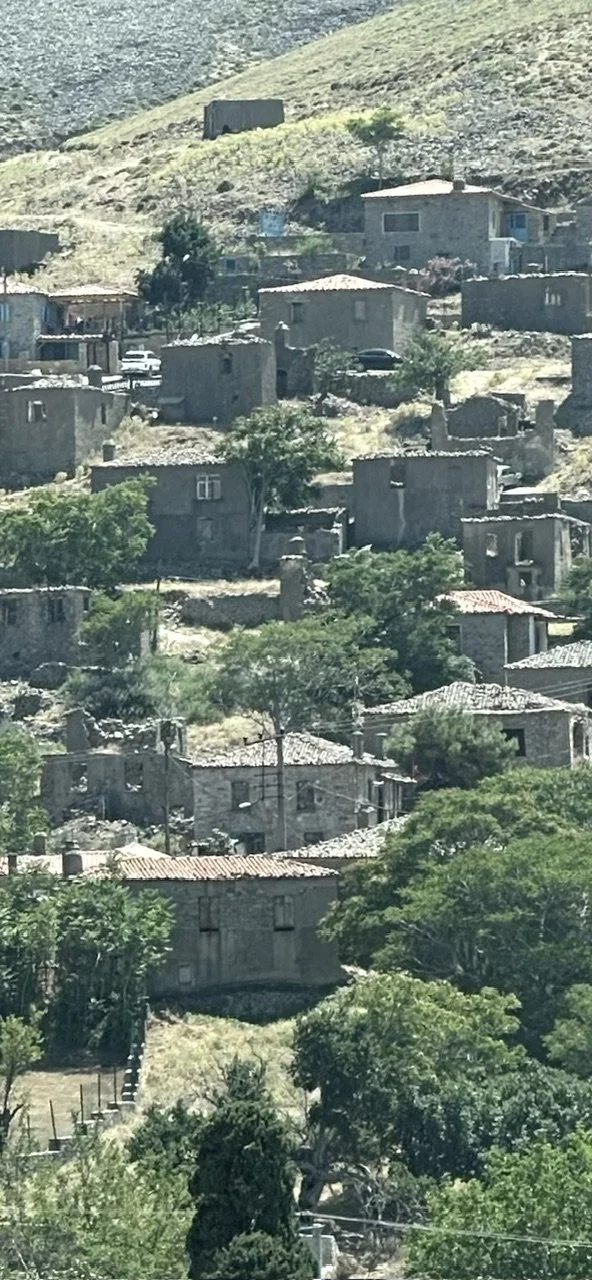
Once home to thousands of people, Dereköy is largely abandoned today
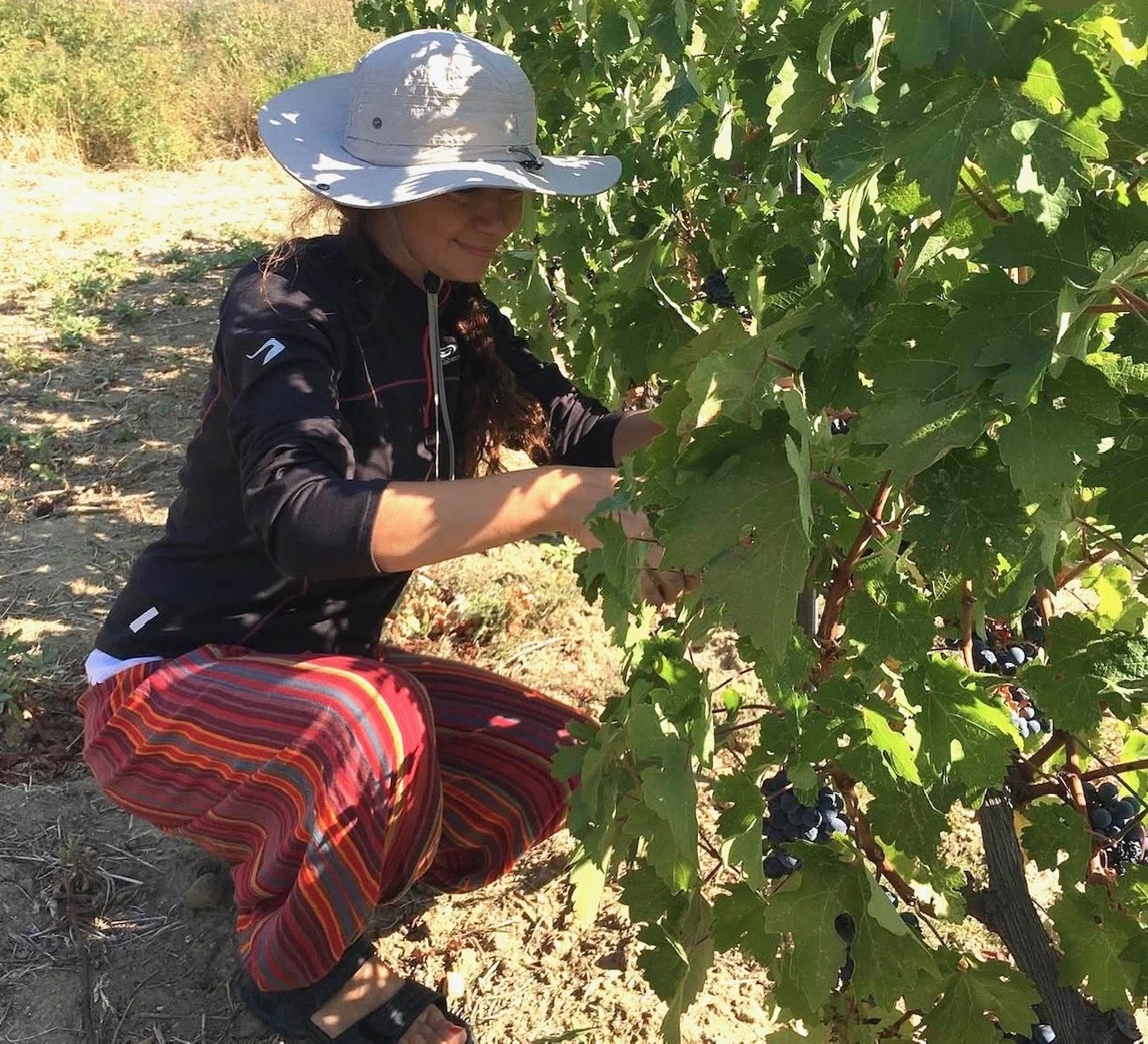
Nermin’s early vineyard days
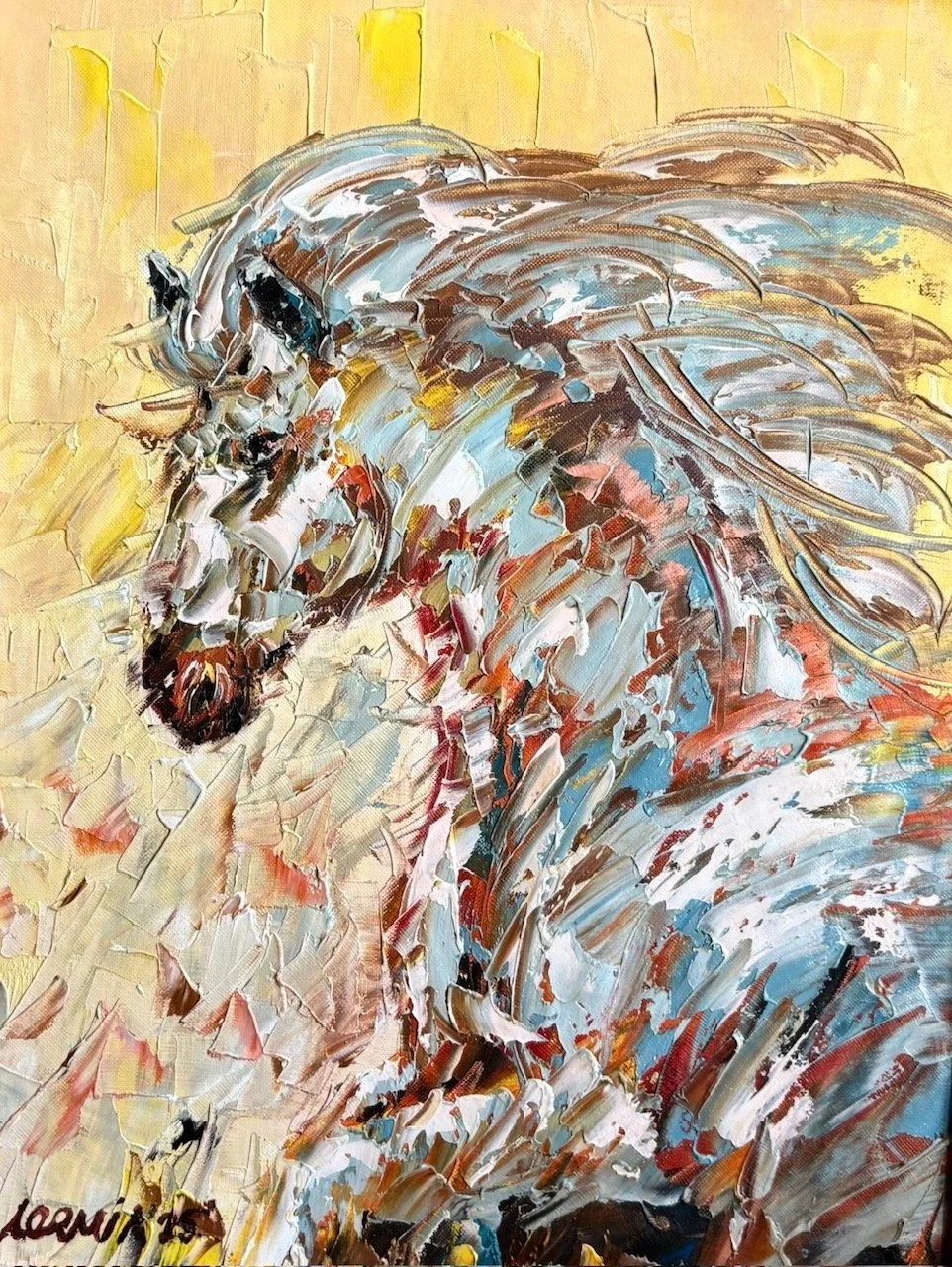
A Group of Friends (painted on the island)
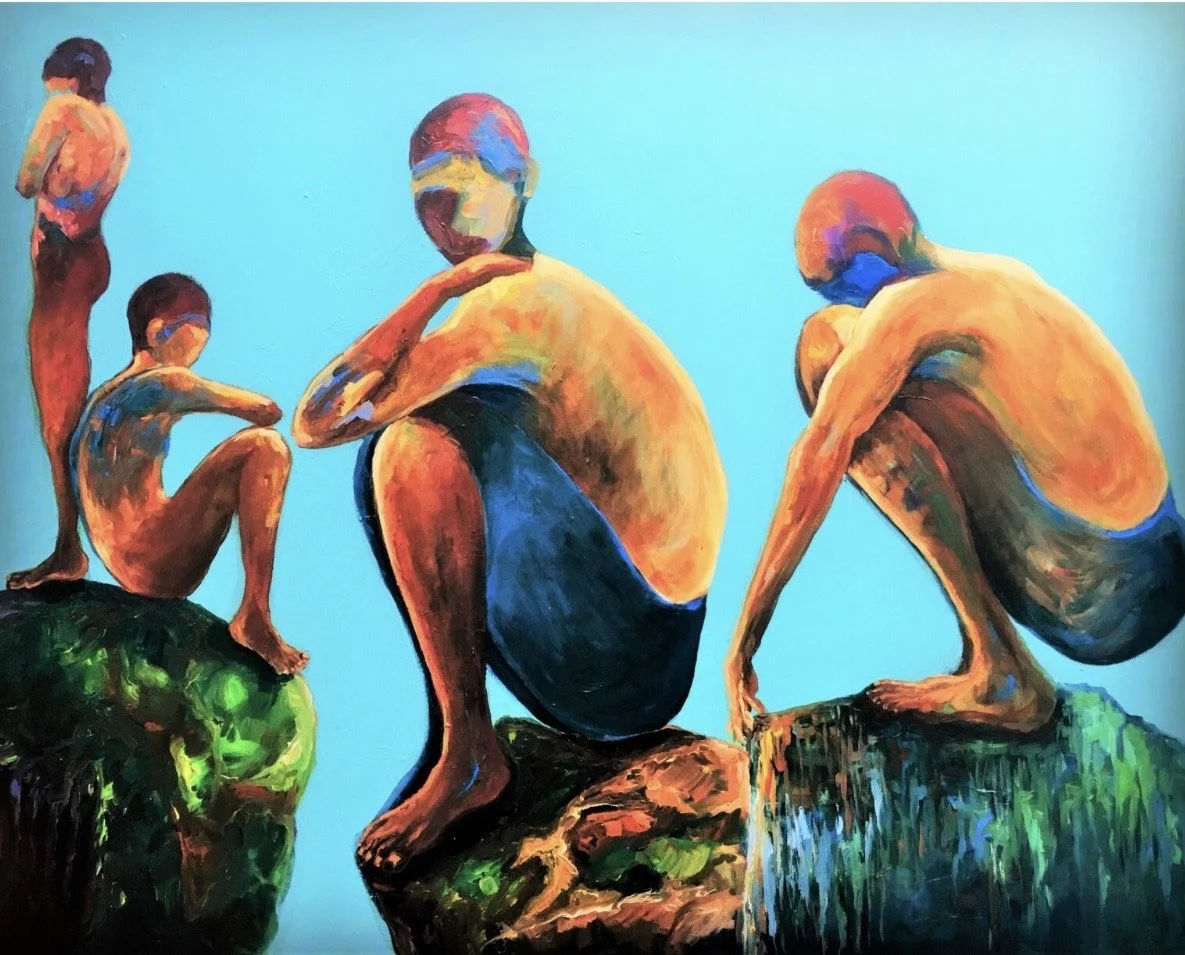
Threshold (created in Istanbul)
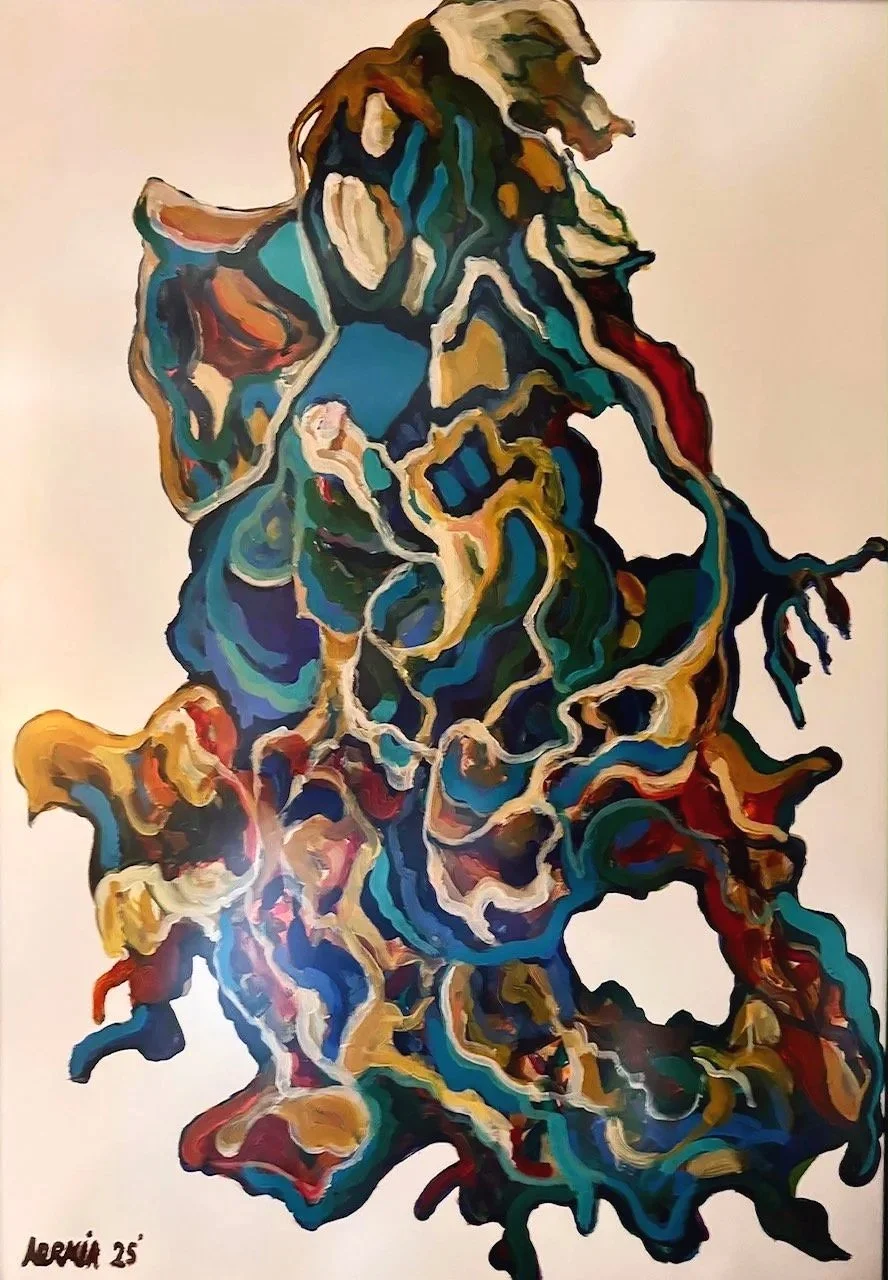
Pusula (Compass), Nermin’s “conceptual” interpretation of Gökçeada