
PADMAJA SRIVASTAVA
BACKSTORY
Padmaja Srivastava is responsible for introducing me to the fascinating art of India’s Adivasi, the subcontinent’s indigenous tribal people.
We ‘met’ in a rather unusual setting—the Beatrice Wood Center for the Arts in Ojai, California, which happened to be hosting an exhibition of tribal art that Padmaja had curated remotely from her home in Bophal, India. Anil Chaitya Vangad, a member of the Warli tribe, was one of the artist’s Padmaja introduced me to. She personally delivered his painting Asara when we finally met during her visit to Istanbul.
AUSPICIOUS BIRDS
WLM=Walter L Meyer
PS=Padmaja Srivastava
WLM How did you get involved with India’s tribal art and artists?
PS My husband and I are architects, and we were building wildlife lodges in central India, which has a huge population of tigers. Tribals mostly live in those forests near tiger reserves. And we saw that a lot of their houses were decorated with wall art. And I thought, this art really needs a platform.
WLM But I think your exposure to so-called tribal art began years earlier.
PS Absolutely. Without my mother’s influence this may never have happened. She was very interested in African art. We used to look at books together when I was maybe seven or eight years old. Back then there was no Internet. She even took me to a resort in Goa completely decorated with African art.
WLM So interesting, Padmaja! How did your acquaintance with the Warli begin?
PS I grew up in Pune in western India, close to where the Warli live. The local government was doing a lot to promote Warli art—putting it on buildings, fabrics, even coasters—but it seemed like a corruption of their art. With my later association with the NGO Association DUPPATA, I started to seriously explore Warli culture.
WLM I understand your language knowledge facilitated that process.
PS Yes, I speak Mati, and the Warli speak a dialect of that language. So it was easy for me to communicate with Warli artists.
WLM I know you’d already done extensive work with the Gond, another tribal group. What did you find so fascinating about the Warli
PS Unlike the Gond, the Warli still practice what they’ve been doing for a thousand years. For the most part, their artists—including Anil Chaiya Vangad who painted your Asara—still farm. During monsoons Anil stops painting so he can return home to sow rice. Warli homes are still constructed of bamboo and clay with mud floors. On the other hand, the Gond have become urbanized.
WLM Please share some of your knowledge about the Warli.
PS Traditionally, Warli art is only done by married women. They still create ritualistic paintings called Lagna Chowk (marriage square) on the walls of houses during weddings. The square inscribes Palghat Devi, the fertility goddess. There’s also a ladder bridging earth and heaven, and a comb symbolizing beauty. A marriage procession surrounds the square. It’s very auspicious.
WLM When did Warli art move from walls to more portable materials?
PS In the 1970s the government was looking for tribal talent they could promote. They found Jivya Soma Mashe, who started doing sketches on paper as a child. Today he’s referred to as the ‘Father of Warli Art.’ Contemporary Warli art is primarily produced on cloth, a bit on paper. Very rarely on canvas. Warli men have also become painters. Some women have also become commercial artists.
WLM What materials do Warli artists generally use?
PS Warli artists use cow dung, red mud, and rice flour. But because over time rice flour disintegrates, they’ve started using white acrylic paint. Some Warli artists have begun to experiment with other colors.
WLM The background of my painting Asara is brown. I understand that says something about the time of the year Anil painted it.
PS Yes, I was just going to mention that. In the summer, cows eat dry grass, resulting in brown-colored dung. But in the winter monsoon season that grass is green. So the color changes.
WLM Let’s focus now on Asara, the painting in my collection.
PS Over time, Warli artists started depicting various stories. Those birds in Asara are auspicious birds. They’re circling above a shrine—perhaps to the tiger god—where a ritual is being performed. This creates an energy spot. It's believed that if there is any kind of disharmony—even a crying child—once these birds appear they create harmony. And the child actually stops crying.
WLM What does Asara actually mean?
PS Asara is when you give support or refuge to someone.
WLM How did Anil learn his craft?
PS Initially from his mother. I'm sure she was invited by relatives to paint on the wall for weddings. Anil also worked several years as an apprentice to Jivya Soma Mashe, whom I mentioned earlier. But today Anil’s got his own unique style. His work is large and bold. He’s even experimented with drawing airplanes and trains. No doubt Anil’s travels abroad have given his work a more contemporary look.
WLM Padmaja, I want to thank you again for introducing me to a completely different world of art and culture.
PS It’s been a pleasure. We’re on the same page. Like you, I’m interested in supporting artists.
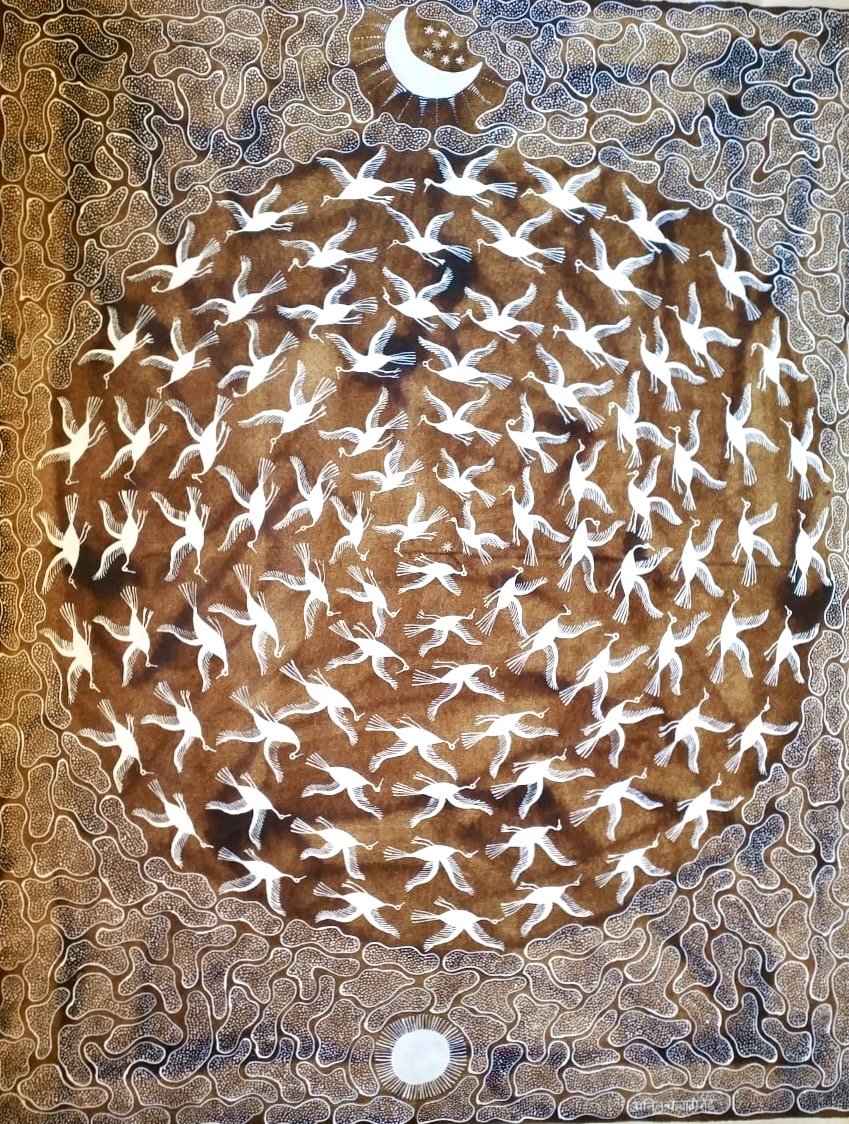
ASARA
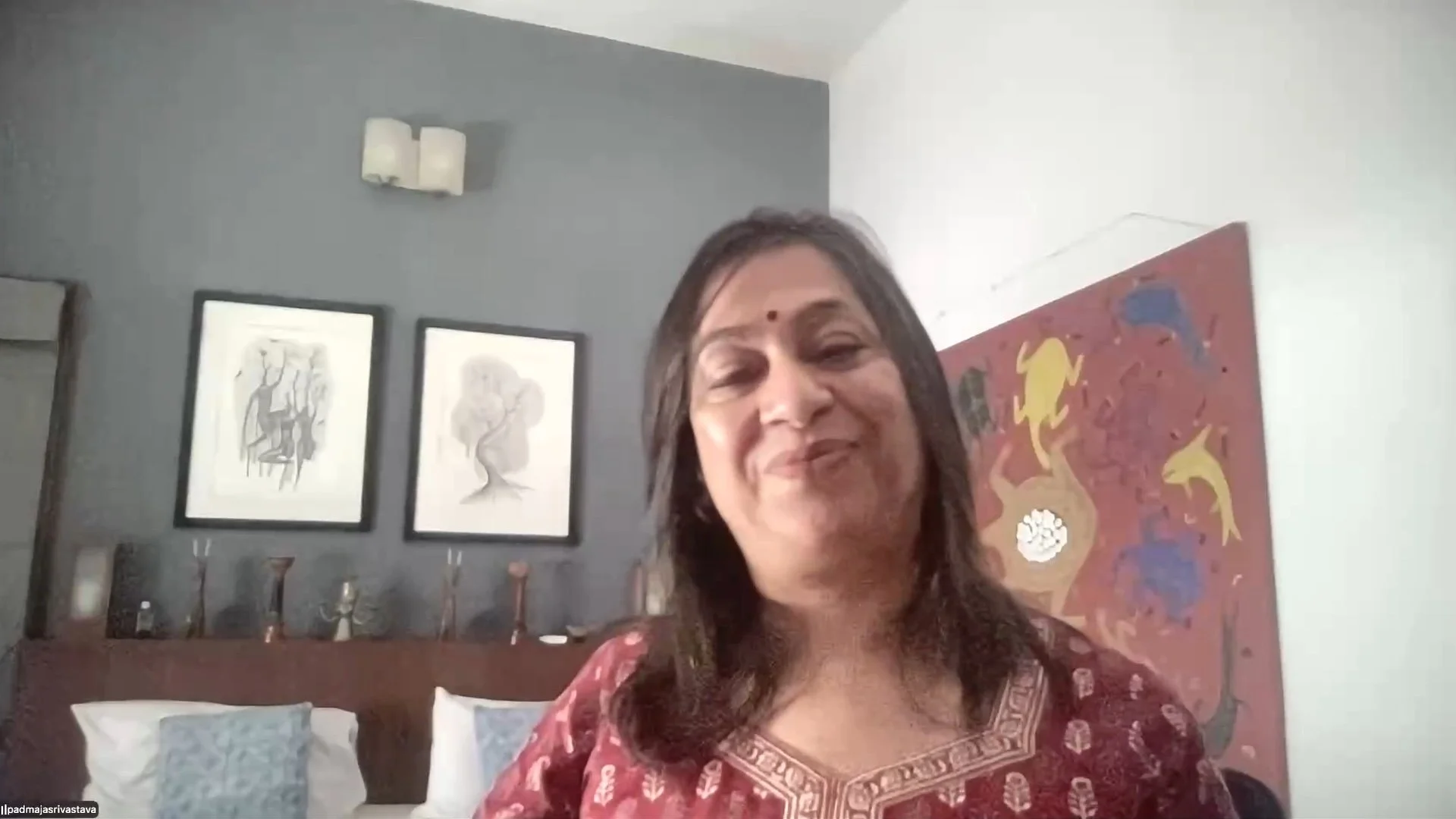
Padmaja Srivastava, Bhopal, India
The Warli still practice what they’ve been doing for a thousand years
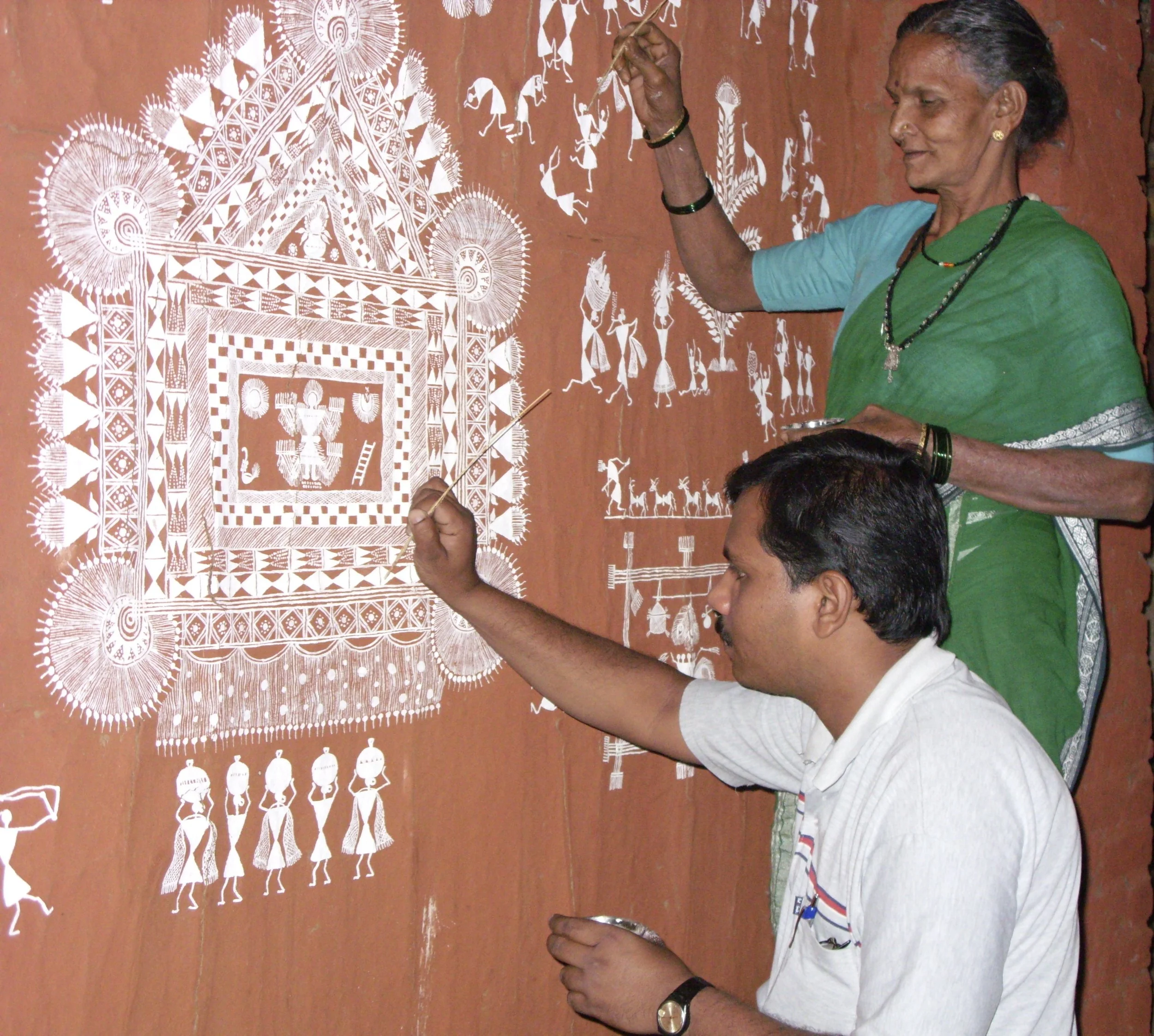
Anil Vangad painting a Lagna Chowk (Marriage Square), Warli village
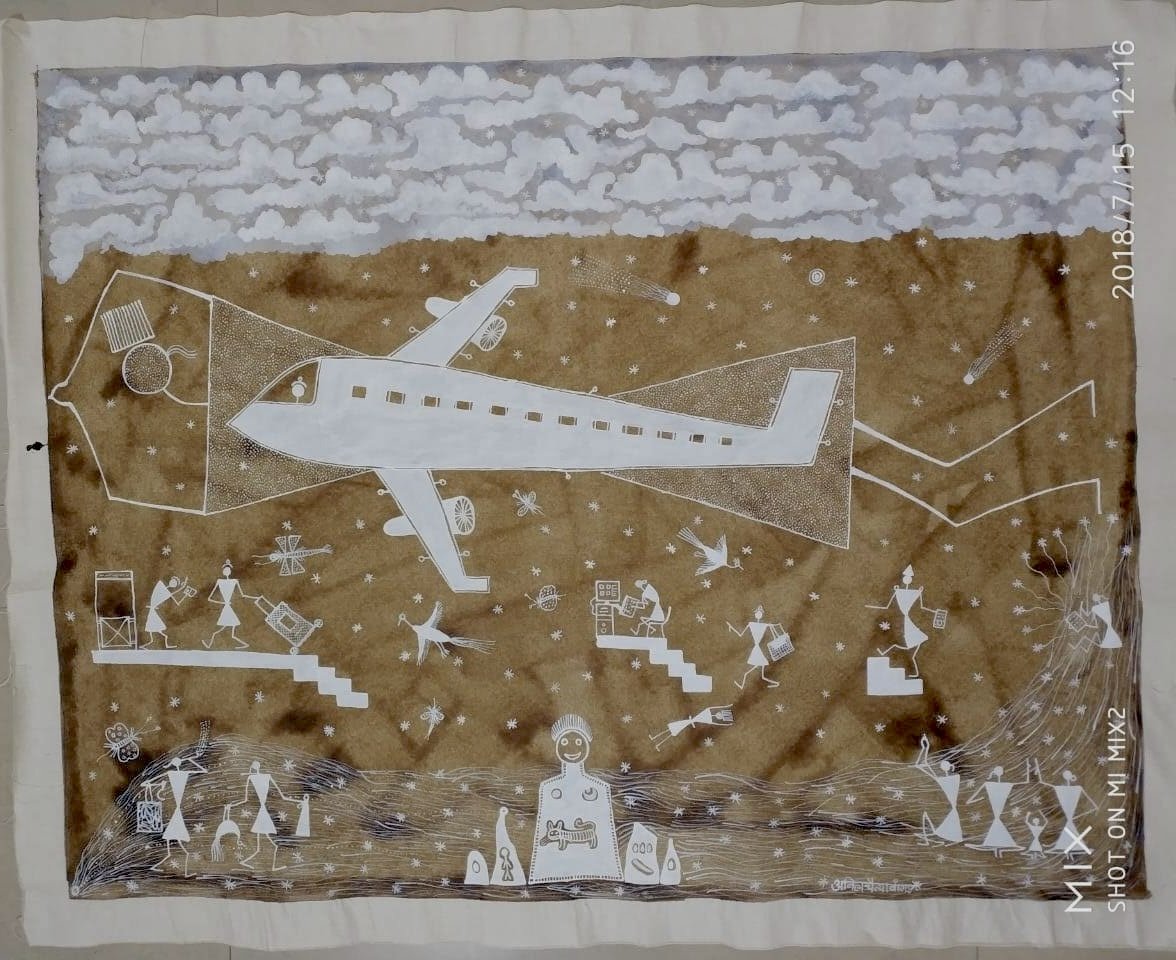
Contemporary work, Anil Vangad
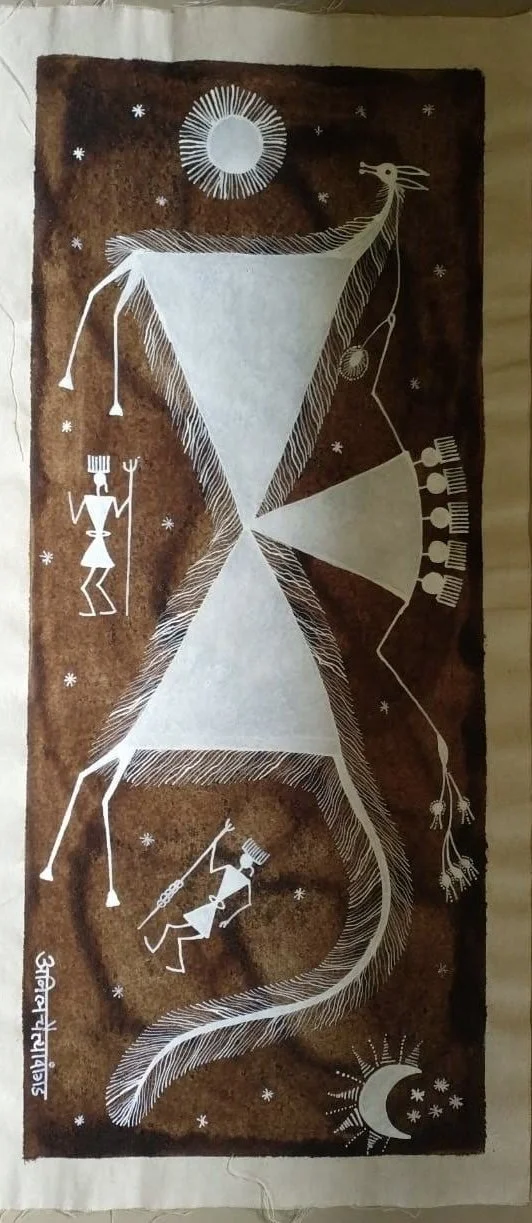
Contemporary work, Anil Vangad