SEVIM ARSLAN
BACKSTORY
In 2010, I purchased a woven artwork at Galeri Selvin, a prominent Istanbul art gallery in the historic Bosphorus village of Arnavutköy. I knew nothing about its creator or history. I only knew that I loved it.
Fast-forward to 2026. I contacted the gallery, who kindly put me in touch with the artist, Sevim Arslan, who is also Professor of Turkish Traditional Arts at Istanbul’s prestigious Marmara University. We met in her university offices, and discovered we share a similar philosophy about craft, tradition, and contemporary art. And so our dialogue began.
ART, CRAFT & TRADITION
WLM=Walter L Meyer
SA=Sevim Arslan
WLM How did you become interested in traditional Turkish, or should I say, Anatolian textiles?
SA Throughout Anatolia, it’s a common tradition for young women to prepare a dowry. They learn handicrafts such as lace-making, embroidery, and needle lace. I practiced these crafts when I was young. However, there was no weaving tradition in my hometown. My relationship with weaving began as a student in the Department of Traditional Turkish Arts in the Fine Arts Department of Istanbul’s Marmara University.
WLM How would you describe the difference between craft and art?
SA While my work embodies craft, it occupies the space between tradition and contemporaneity, craft and art. Craft is a discipline founded on mastery, repetition, and technical perfection. The object produced can be technically flawless and reproducible. A work of art is unique and irreproducible. While the traditional weaver produces a functional object, the modern artist uses weaving to express ideas and a personal artistic language.
WLM In terms of your artwork, what’s your relationship with tradition?|
SA For me, tradition isn’t merely a reference point. It’s a carrier of cultural memory. But my relationship with this memory isn’t a nostalgic return to the past. I reinterpret traditional elements through ornamentation, symbolism, and at times through references to mystical signs. This way I create a work that speaks simultaneously with the past and the present.
WLM What inspired the beautiful weaving in my collection?
SA Your piece was influenced by the visual structure of Ottoman firmans—imperial decrees issued by the Sultan. I mostly used the flat-weave kilim technique to weave it. However, to create the decorative surface patterns, I added weft (horizontal) threads using the cicim, zili, and sumac techniques. But I didn’t apply them in their strictly traditional forms nor do they have a specific narrative or symbolic meaning.
WLM I’m very curious about the circular motif at the bottom of this work. Is it a kind of personal signature?
SA Exactly! It’s a stylized sümbül (hyacinth) motif. Admired for its elegant form and distinctive fragrance, the hyacinth is one of the defining flowers of Ottoman visual culture, along with the rose and tulip. It appears in poetry (where it symbolizes the beloved’s long, curly hair) and a wide variety of other mediums, including ceramics, painted decoration (kalem işi), textiles, carpets, embroidery, wood, metal, stone, and manuscript illumination (tezhip). It embodies a rich cultural memory.
WLM I’ve heard some traditional cultures have specific songs associated with specific types of weavings or motifs. Is there any particular song or musical genre that you listen to when you weave?
SA Not really. If I do listen to any music, it’s usually Western classical. Sometimes, though, I prefer silence. The rhythm of the loom and the repetitive nature of weaving can feel like a kind of music of its own.
(This interview has been edited for clarity and length.)
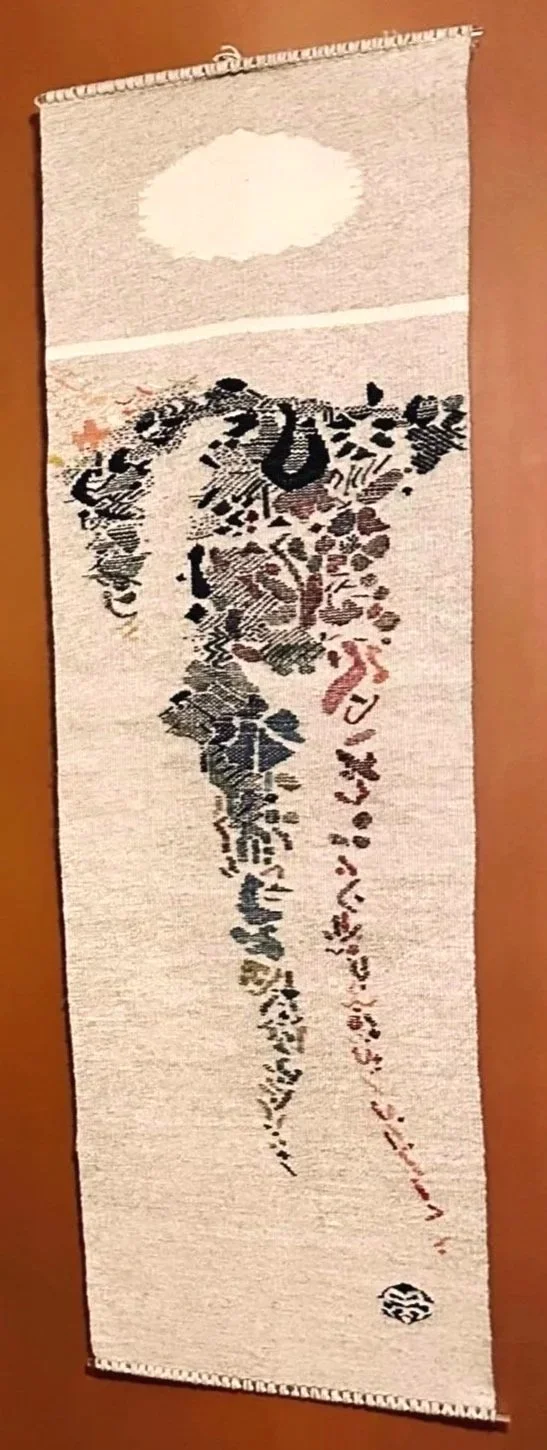
Sevim’s untitled text artwork
Tradition is a carrier of cultural memory
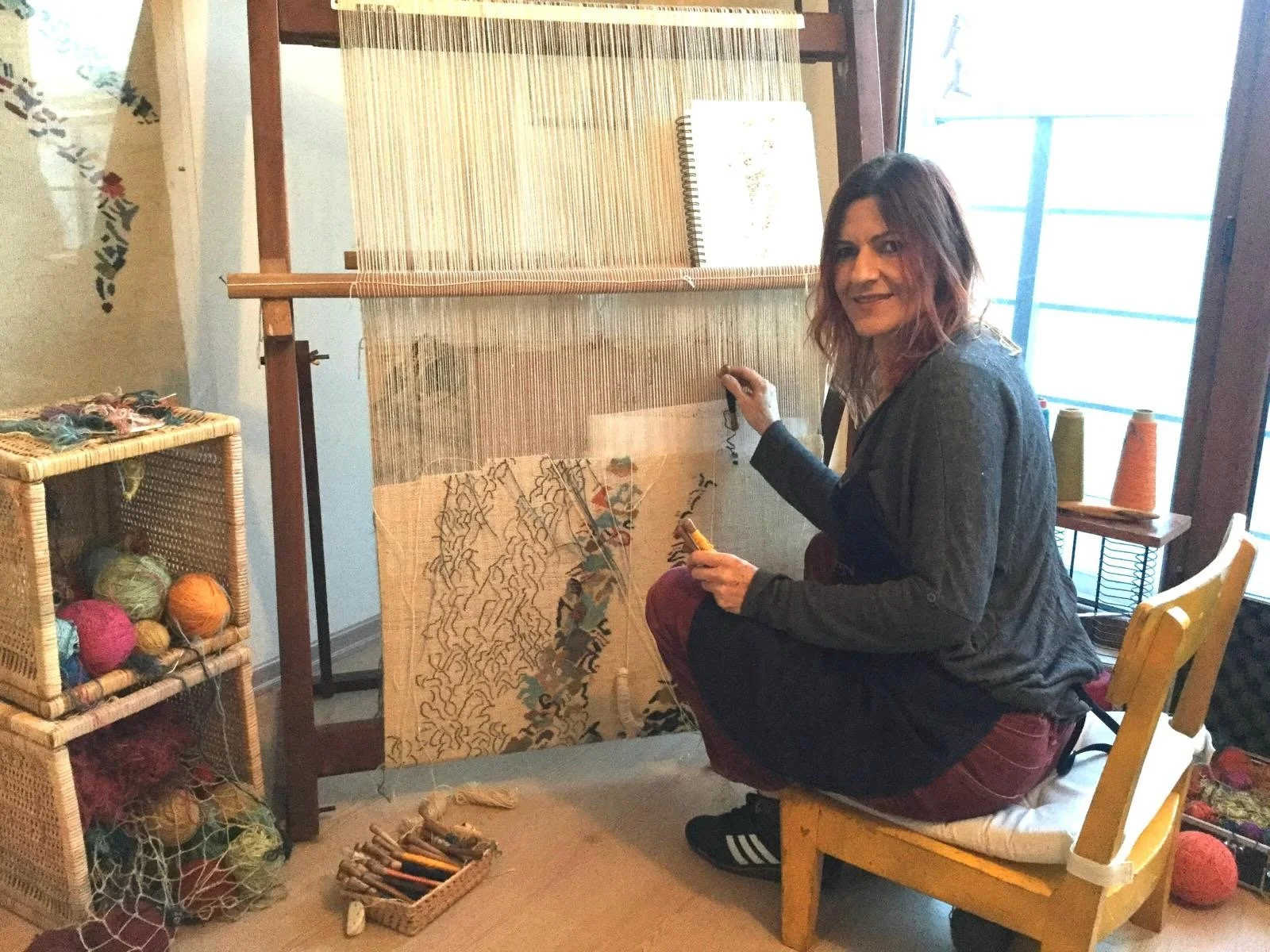
Artist and Professor Sevim Arslan
Craft is founded on repetition
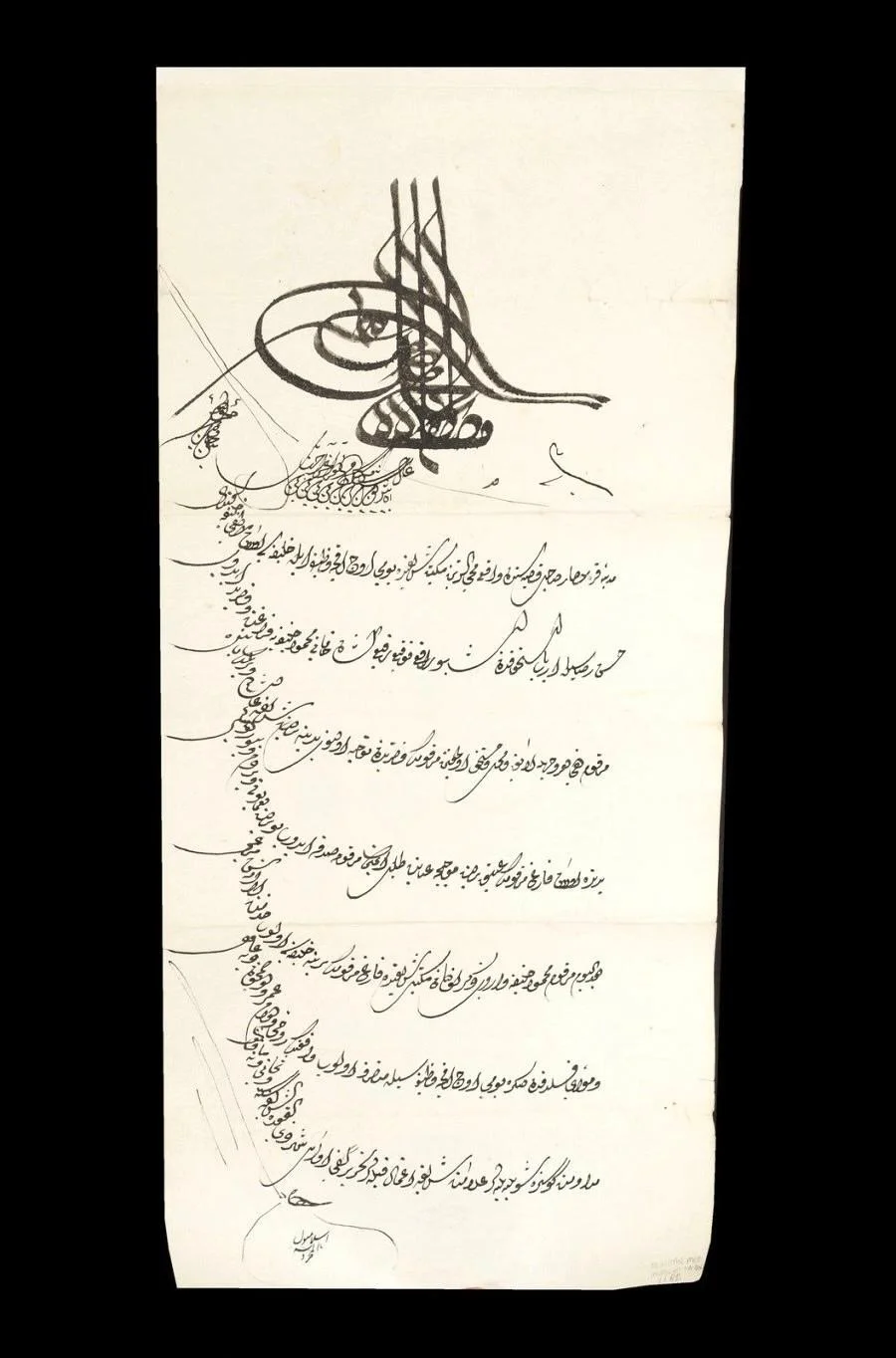
An example of an Ottoman firman, a source of inspiration
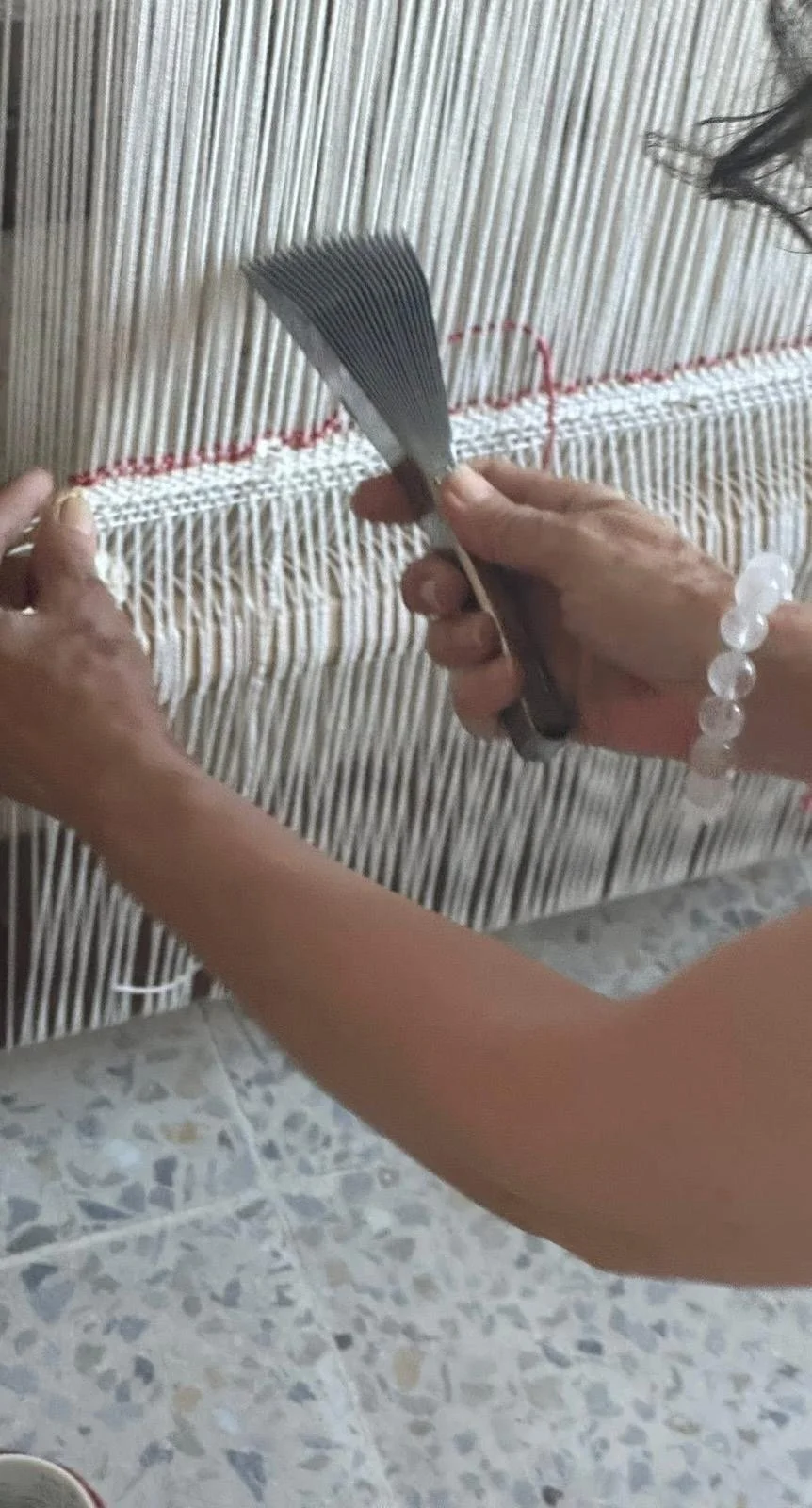
Sevim uses a “kirkit,” a type of comb, to tighten the weft (horizontal) threads
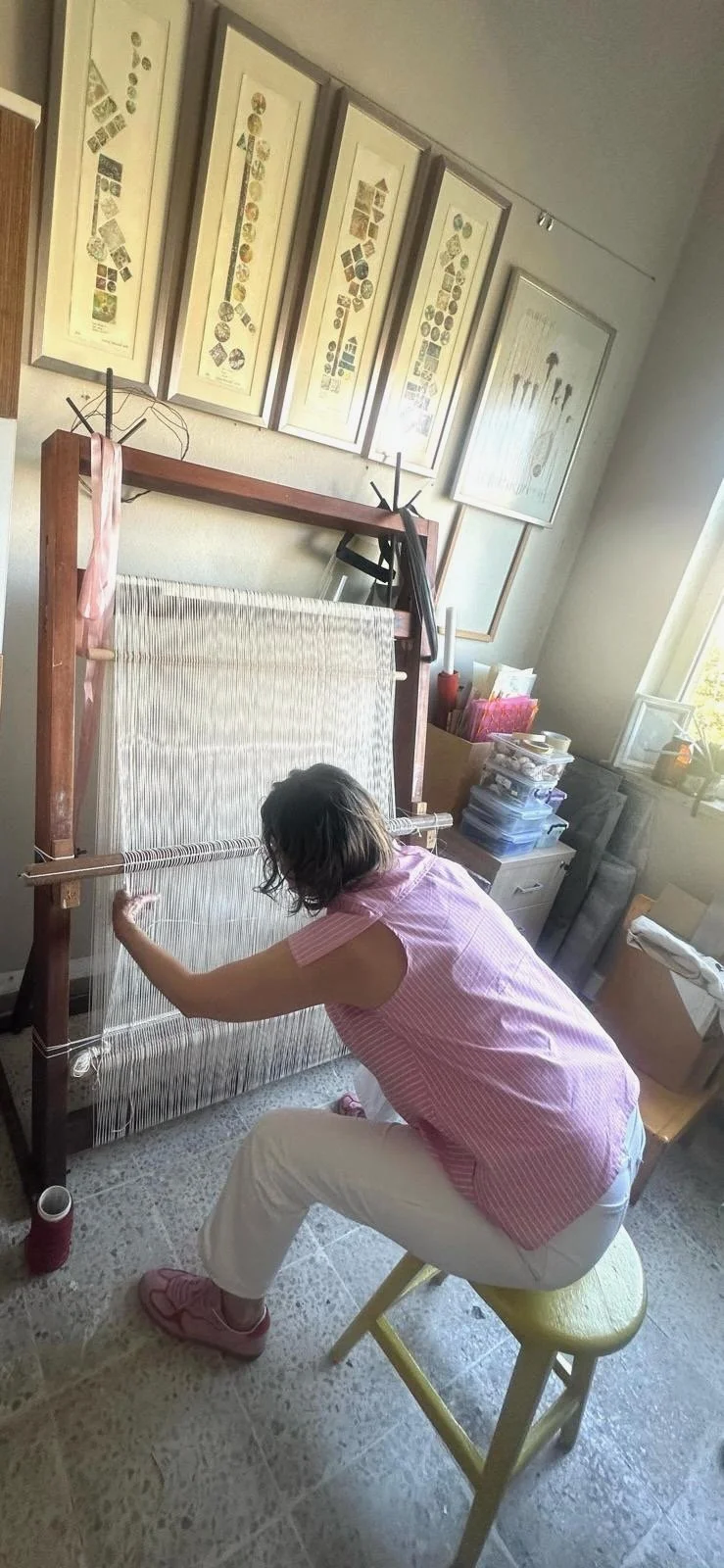
Sevim at work at her vertical loom, known in Anatolia as “istar”
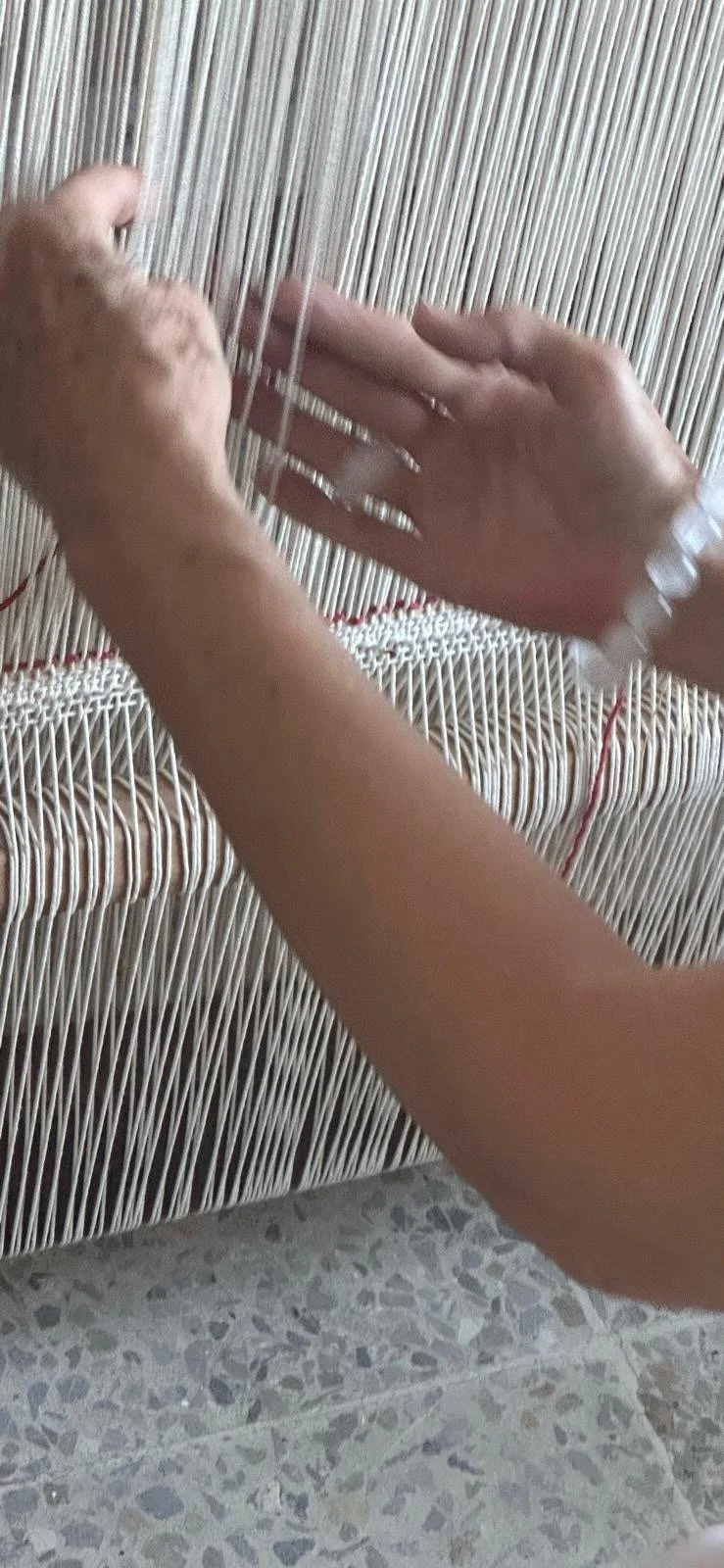
Weaving
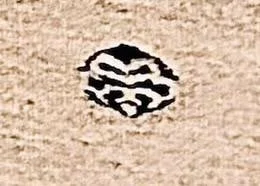
Sevim’s stylized “hyacinth signature”