AYHAN ALGUR
BACKSTORY
Like a modern-day Scheherazade, Ayhan Algur’s mission is also to engage his audience in order to preserve a life—the glorious accomplishments of past Anatolian and Middle Eastern civilizations.
I first became acquainted with Ayhan’s art when I saw his Kybele painting on Instagram. A series of artistic collaborations ensued. He was one of the first artists to be exhibited on www.artwithoutboundaries.art (Evocations of Glories Past). Followed by a solo exhibition at a congenial Istanbul café. And a group show in my home titled Meddah, The Storyteller.
PAST & PRESENT MUSES
WLM=Walter L Meyer
AA=Ayhan Algur
WLM Ayhan, what intrigued you about Anatolia’s past civilizations that they became an important focus of your art?
AA Even in my childhood, history was the lesson I liked the most. Somehow I have a strong link with the past. Especially the Middle Ages. Not just the Turkish, Persian, Arab or Byzantine past. Even Europe, China, Japan, and Korea. It’s my passion. So when I combine it with painting—my other passion—it’s great.
WLM Your earliest involvement with art, with drawing, was cartoons or caricatures, wasn’t it?
AA Yes, when I was in high school I became interested in that art form, and even joined a cartoonist organization. My interest extended into university as well. I did a lot of political cartoons, but later— in my 30s—I decided I needed to go a different way. I wanted to paint, especially figures because of this earlier interest. But ink and pen had been my materials. And canvas, acrylics and brushes were totally different.
WLM So where do you research the visuals from the Middle Ages?
AA The biggest source is the Internet. But it can also be Pinterest and books. My inspiration isn’t just from paintings. It can also be from ceramics. In my research I found a lot of Ottoman and Persian miniature paintings. But Ottoman works focus on palace bureaucracy and soldiers. While Persian ones tend to tell stories from daily life, from poetry.
WLM I first saw your artwork on Instagram. A painting of Kybele, the ancient Anatolian mother goddess.
AA I remember you texted me and said you wanted to buy Kybele. It was the first message I got from someone interested in my paintings. And I said, ‘Wow.’
WLM I didn’t know I was your first customer!
AA Yes! Then we became friends and while visiting your home I saw a Syriac Christian icon painted by Nasra Simmeshindi from Mardin in eastern Turkey, on your wall. Her artwork opened a new window for me.
WLM How so?
AA I liked her child-like, naïve style. Her use of bright colors. And she painted on fabric, not canvas. I researched as much of her work as I could find on the Internet because sadly she was no longer alive by the time I discovered her.
WLM And this led to Entertaining with Music & Poetry, your painting in my collection—which, by the way, you painted on fabric. Do you remember what inspired you?
AA Probably a 12th-century Seljuk ceramic plate. The halo could have come from Celtic art or a Byzantine icon. It’s usually a combination of sources that move me.
WLM You know that your painting and Nasra’s hang side-by side in my bedroom, so I look at them every morning when I wake up. Today I noticed that the style of the flower border in Entertaining is quite different from that of the main painting. Does that have something to do with Nasra’s icon?
AA Yes. Her style combines both freehand painting and block printing. And the flowers in her icon were block printed. I don’t do block printing, but using freehand technique I tried to make it look like block printing.
WLM Talk about your use of heavy black outlines in this painting. Does it relate to your early cartoonist days?
AA Definitely. After all, cartoons are just bold black lines, aren’t they?
WLM Then I assume you start with just the black outlines and then fill in the color. Right?
AA Not usually. Generally I make a draft first using pencil or pastels. Next I add all the colors. I add the black outlines last.
WLM Now let’s talk about the subject of Entertaining with Music & Poetry. I remember you told me it reflected the so-called Golden Age of Islam in 7th-12th century Baghdad.
AA For me, it wasn’t so much about that era’s religion. It’s about multiculturalism and tolerance. Arab, Persian, Indian, Christian, and Jewish scholars all worked together.
WLM Well I learned a lot today, Ayhan. For instance, I didn’t know I was your first customer. Your Kybele is sitting on a shelf in my kitchen.
AA Normally, I'm not really good at talking about art. That’s why I paint. But this was a real pleasure. Thank you, Walter.
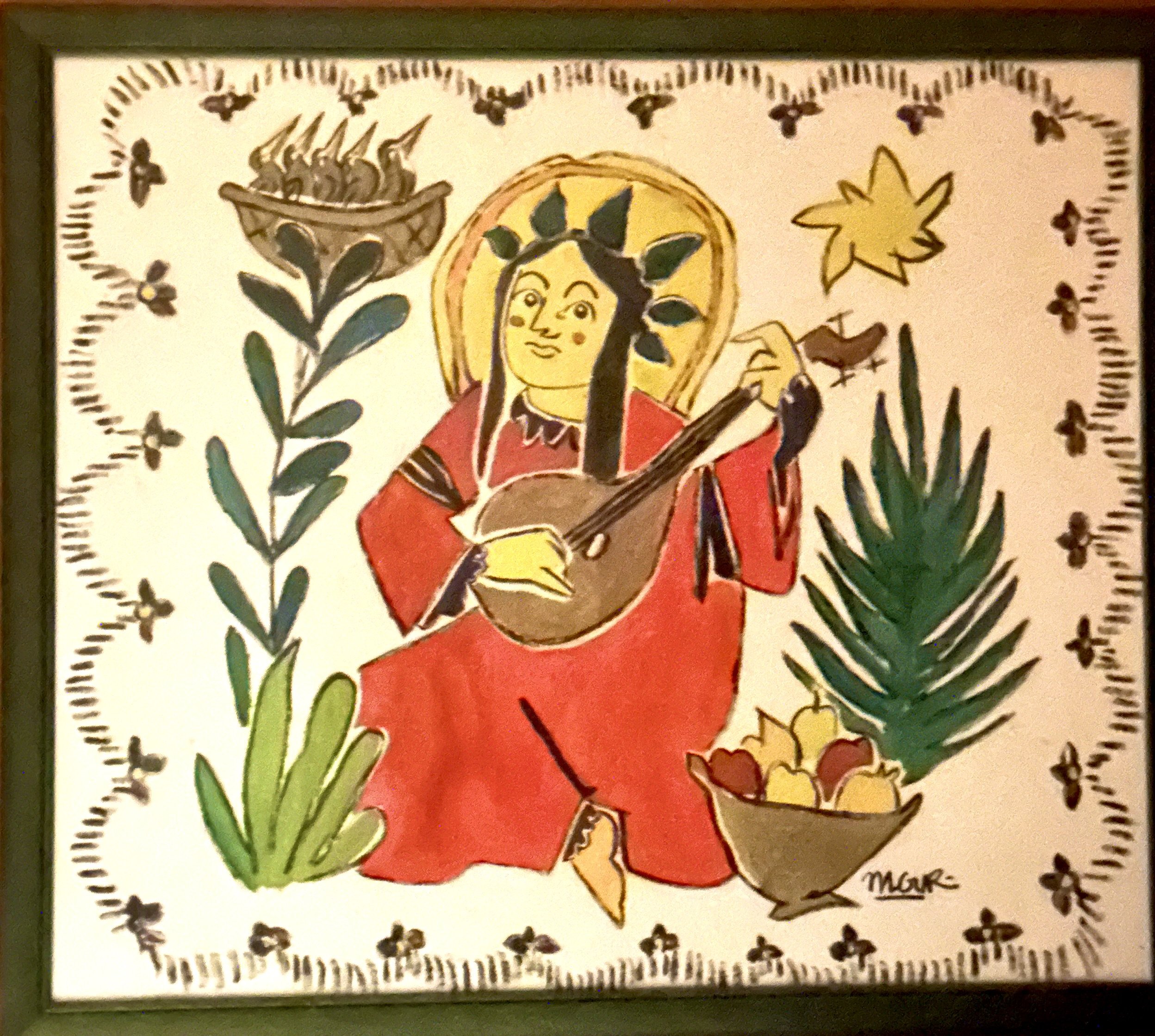
ENTERTAINING WITH MUSIC & POETRY
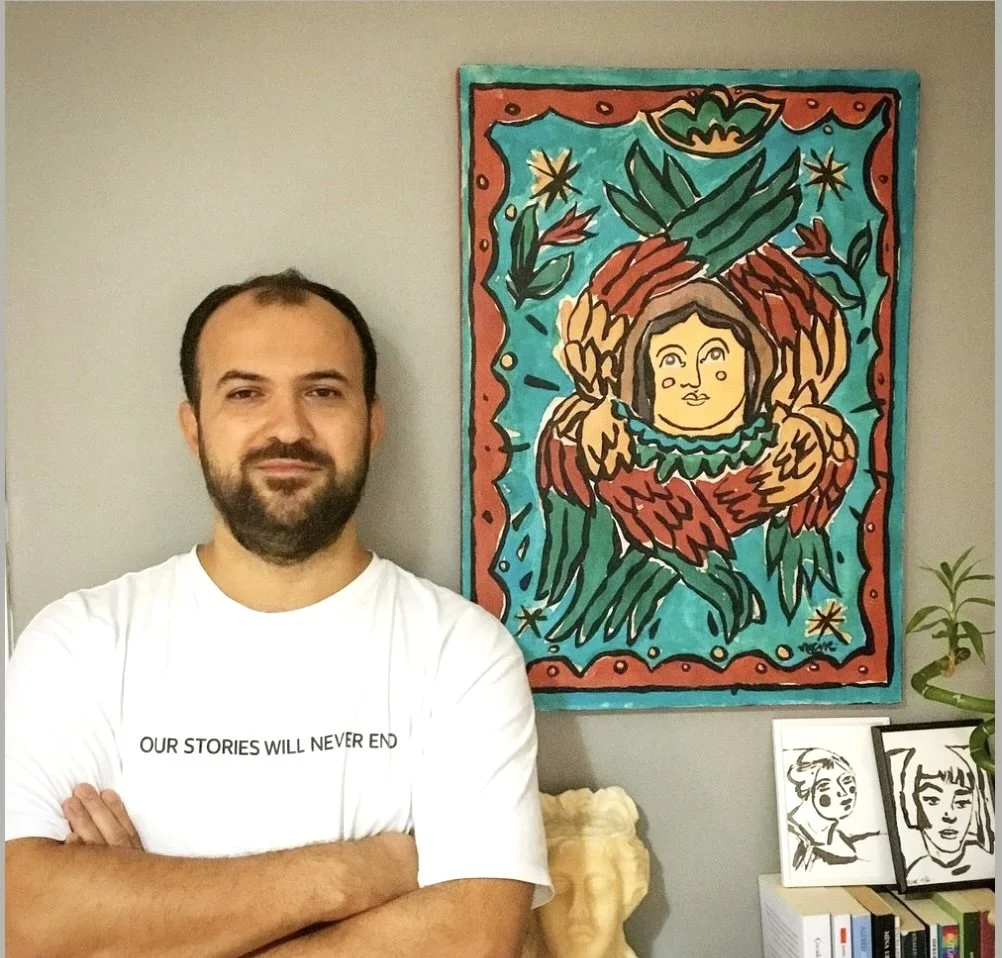
Ayhan in his studio, Istanbul, Turkey
It’s about multiculturalism and tolerance
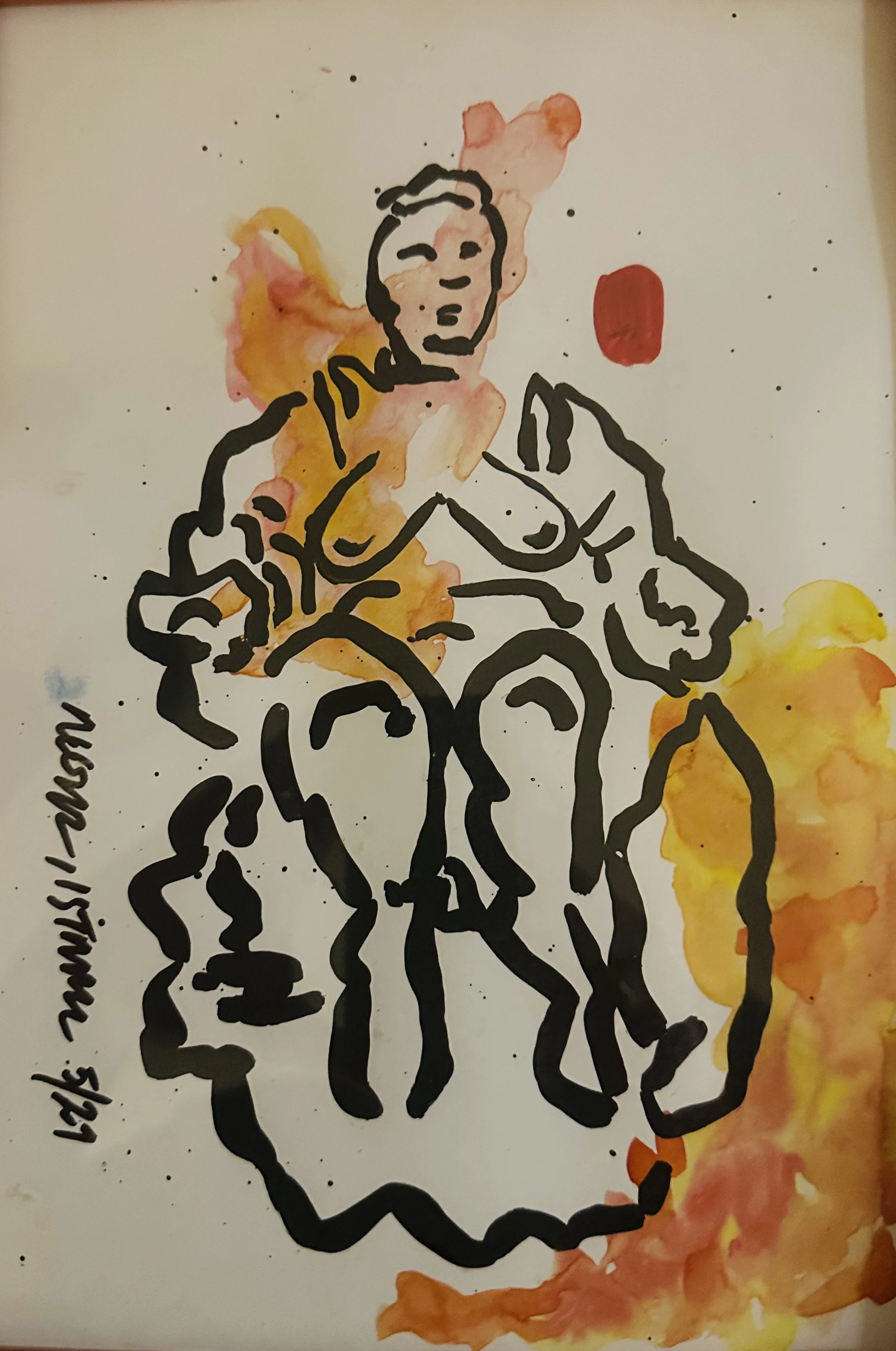
Ancient goddess Kybele
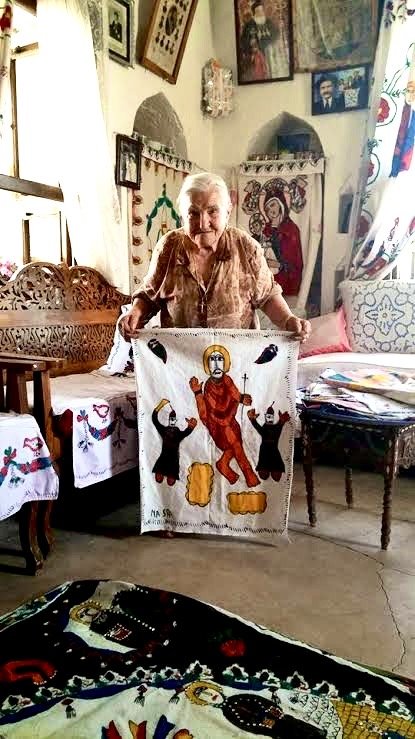
The late Nasra Simmeshindi in Mardin
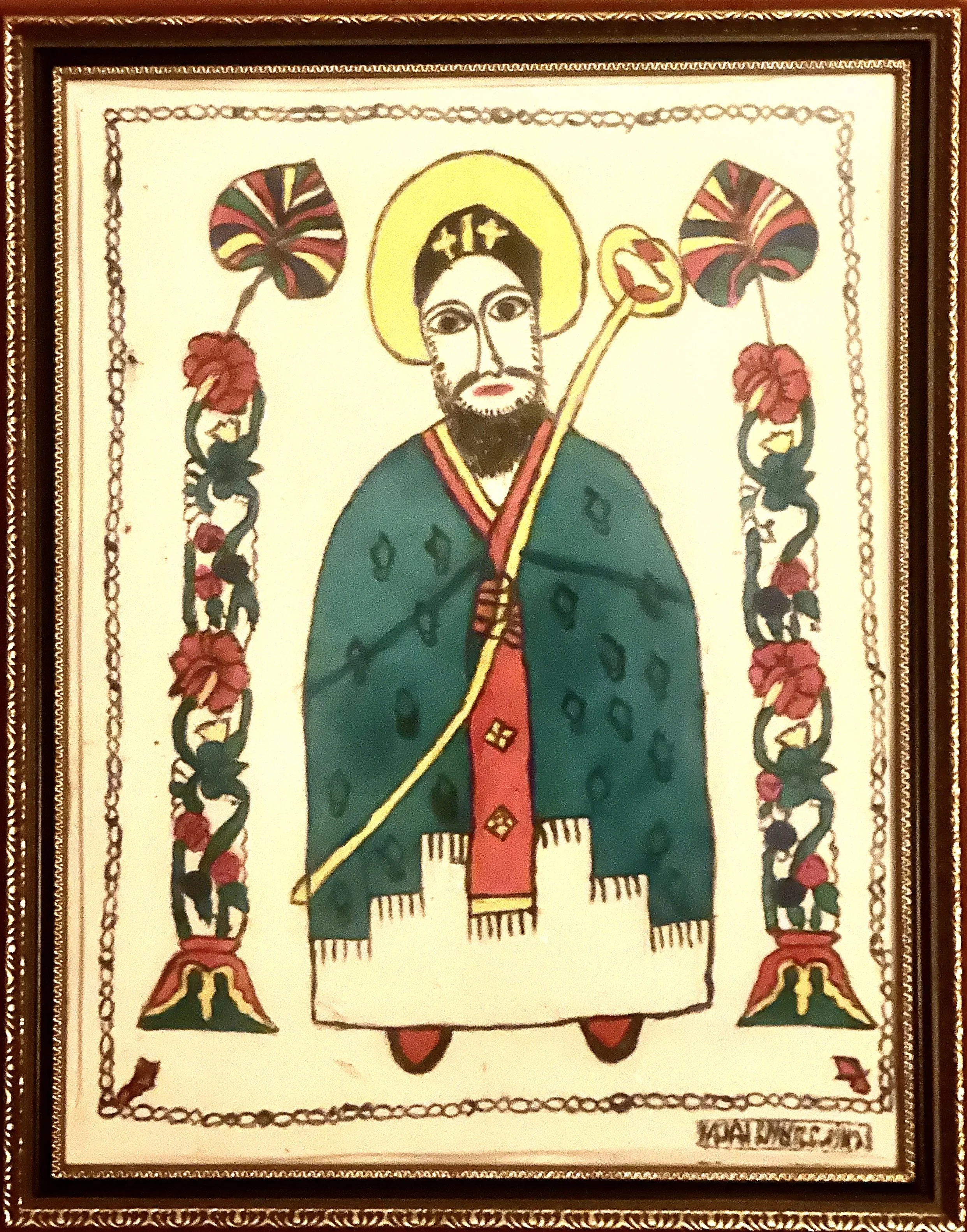
Bishop icon, Nasra Simmeshindi
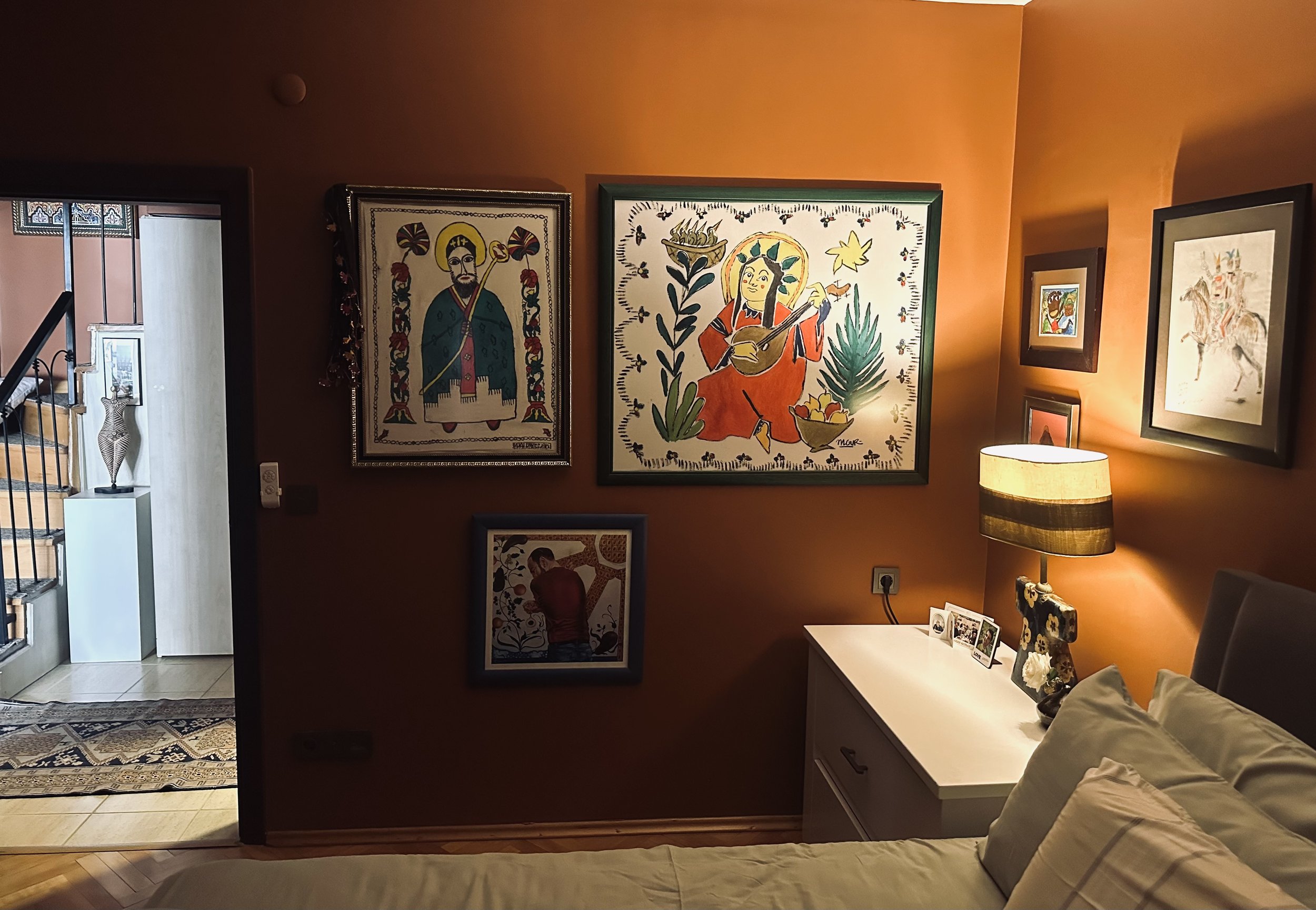
Nasra and Ayhan’s art, side-by-side in my bedroom