Hashim Kurban’s Interview
BACKSTORY
What intrigued me about Hashim Kurban’s paintings when I first saw them on Instagram was their documentary nature. They seemed to be recording a disappearing culture—the Uyghur, a Turkic people who’ve lived for centuries in Silk Road oasis towns.
Though Hashim was born and lives in Kazakhstan, his art is an homage to his Uyghur ancestry. A visit to the Bezeklik Thousand Buddha Caves was the apotheosis of his desire to see his homeland. A creative explosion followed back in Almaty, including Melody of Turfan, which hangs on my bedroom wall.
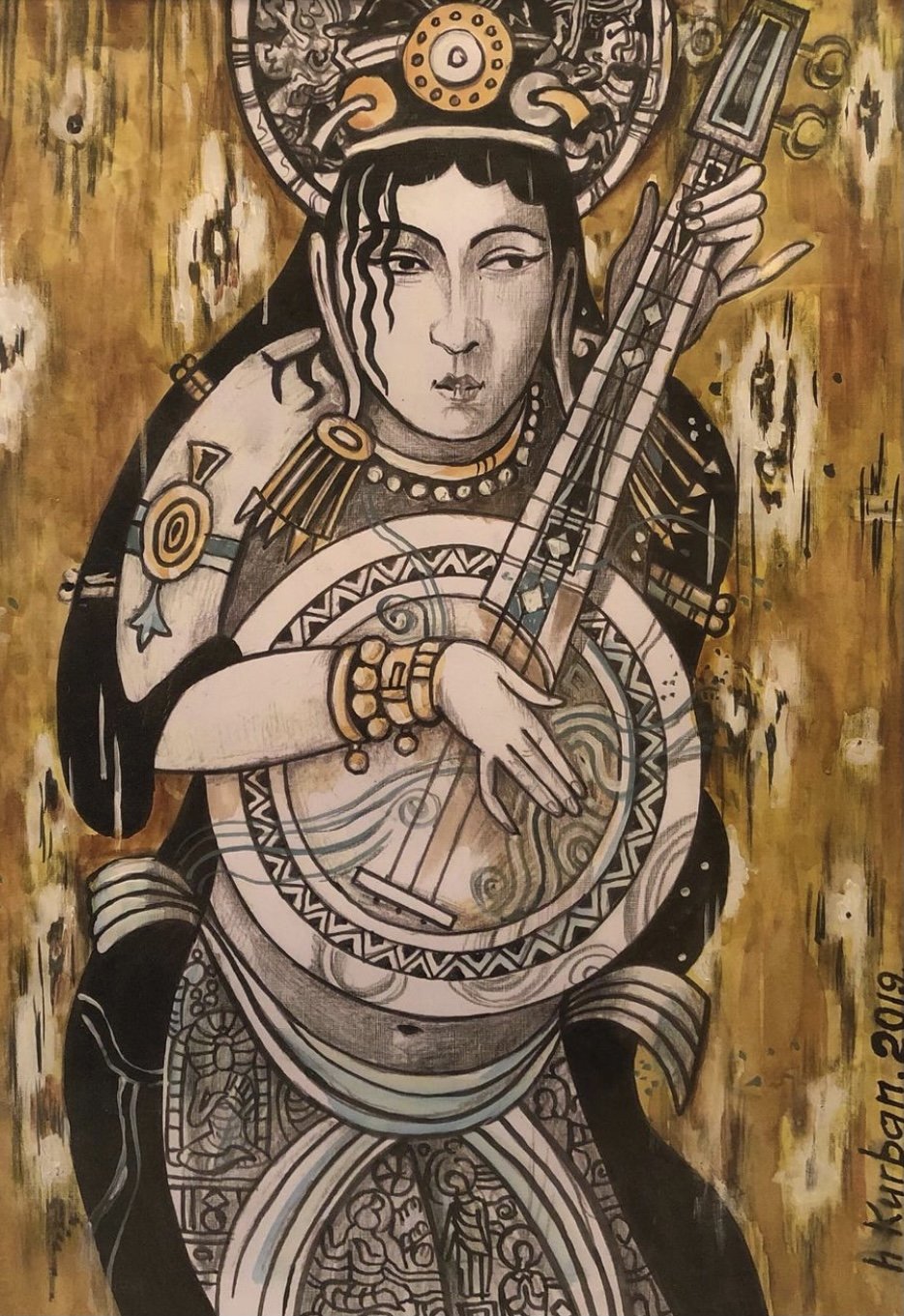
Melody of Turfan was inspired by the artist’s life-changing visit to the sacred Silk Road Thousand Buddha Caves.
Kazakh artist Hashim Kurban traces his Uyghur ancestry to the Silk Road oasis towns of Kashgar and Khotan.
WLM=Walter L Meyer
HK=Hashim Kurban
WLM
Hashim, I know that though you were born and live in Amaty, Kazakhstan, you trace your Uyghur roots to Silk Road oasis towns located in what’s today western China.
HK
Yes, I trace my Uyghur heritage to the oasis towns of Khotan and Kashgar through my grandfather and great-grandfather. My maternal grandfather, Kasyn, was born and lived in Kashgar. Unfortunately, he died young, but my mother told me lots of stories about him.
One of the founders of the Uyghur theater, he also recorded TwelveMuqams—a masterpiece of medieval Uyghur musical art—on a wire recorder, the earliest form of magnetic recording technology.
My grandfather’s legacy is a very important part of my cultural memory.
WLM
In addition to your mother’s stories, how else did you learn about Uyghur culture?
HK
When I was a student, older Uyghur artists often told stories about the Myn‑Oy Bezeklik Thousand BuddhaCaves, and showed old b/w photos of its murals. For us, they were almost legends. Traces of a great culture that survived for thousands of years.
But my serious interest began in 2000, when our group of Uyghur artists from Kazakhstan visited St. Petersburg’s Hermitage Museum, and saw authentic fragments of Bezeklik murals. I was deeply moved by how gracefully and precisely our ancestors worked with color, line, and form a thousand years ago.
Since then, I dreamed of seeing those murals with my own eyes.
WLM
When did this dream come true?
HK
In 2006, when I visited the oasis town of Turfan near the sacred caves. This was my first visit to my ancient homeland. I spent two days in Turfan, and one full day in the caves.
Those days were filled with a variety of emotions—awe, reverence, and excitement.
WLM
Tell me more about the experience of finally being in a place you’d heard so much about your whole life.
HK
It felt like I was in a time machine. Connecting with people who lived many centuries ago. They weren’t just murals. They were the voices of past eras. The voices of artists who lived surrounded by music, dance, spirituality, and light. It was an indescribable feeling, as if I could touch history itself.
WLM
I understand, however, that the caves had lots of rules.
HK
Yes, taking photos or even making sketches inside the caves was strictly forbidden. I had to memorize everything with my eyes: shapes, gestures, lines, color tones, and textures. I tried to absorb every image so I could recreate them later in my artworks.
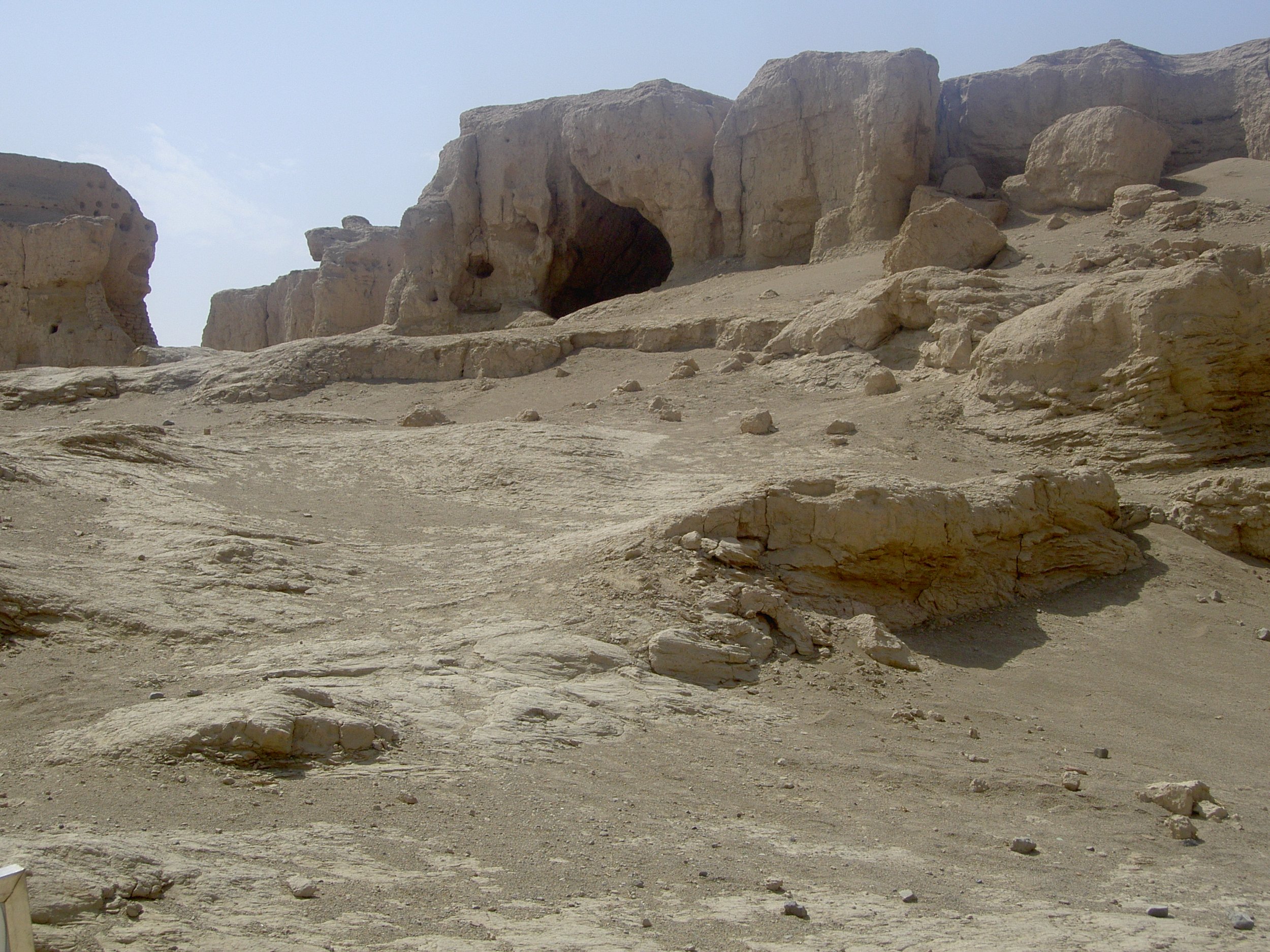
However, I did manage to take a few photographs of the exterior of the cave entrances.
WLM
Why did you choose to depict this graceful woman in Melody of Turfan?
HK
There were many male and female figures in the murals related to music and spirituality. But I was especially moved by this refined female figure—probably a princess or noble musician. The fragment I saw was incomplete, but its grace and musicality struck me so deeply that I decided to create this artistic image inspired by this lost mural.
Of course, it’s not an exact copy. It’s an interpretation. My own version based on the fragments I remembered, and the inspiration I felt from being there.
WLM
What musical instrument is she holding?
HK
It’s a multi‑stringed instrument—similar to an ancient guitar—characteristic of both Buddhist and ancient Uyghur musical traditions. They accompanied dances, spiritual rituals, and court performances. Music has always been an essential part of Uyghur culture.
WLM
Can you comment on what she’s wearing?
HK
This is how celestial beings, musicians, and princesses were depicted in the Bezeklik murals. Her clothing is based on Buddhist traditions of that era: light, flowing fabrics and partial drapery. Symbols of purity and spiritual openness.
WLM
No doubt you’ve created other work inspired by your visit to the caves.
HK
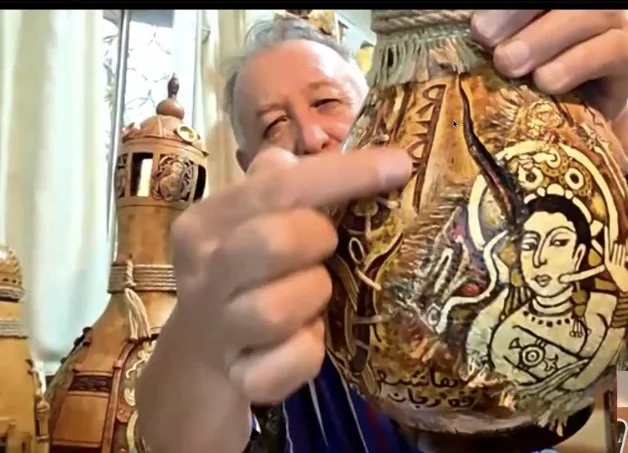
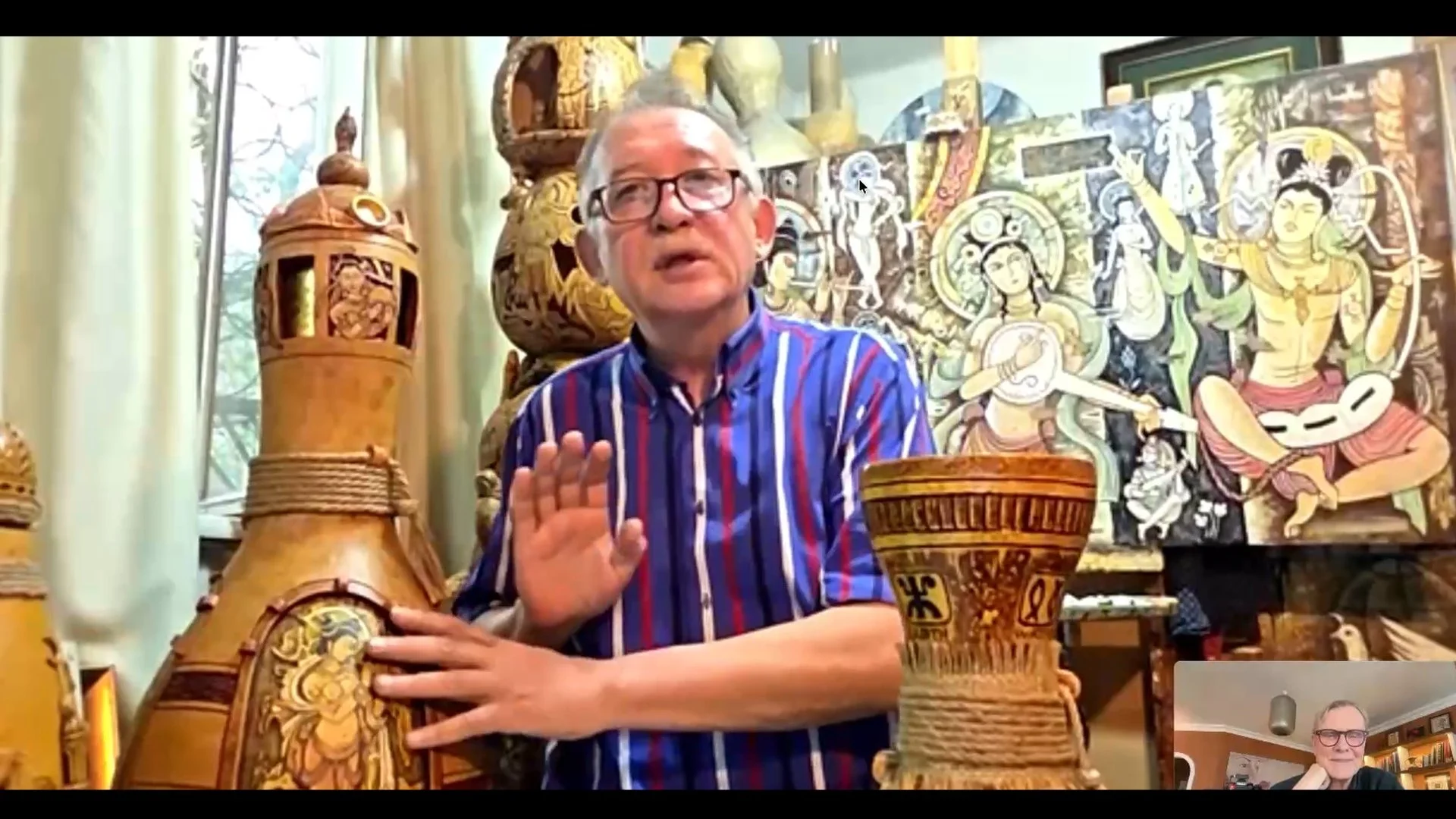
Of course! In addition to other paintings, I’ve made works on gourds. They not only reflect my experience in the caves, but also the time I spent visiting Kashgar, home of my maternal grandfather.
I’ve even signed some of those works in the old Uyghur script.
WLM
Hashim, I’m sure this once-in-a-lifetime experience of visiting the caves and your ancestral homeland will resonate with you for years to come.
HK
Absolutely. And it will continue to inspire me to create art in a variety of mediums that will transmit the beauty and depth of Uyghur culture to many generations into the future.