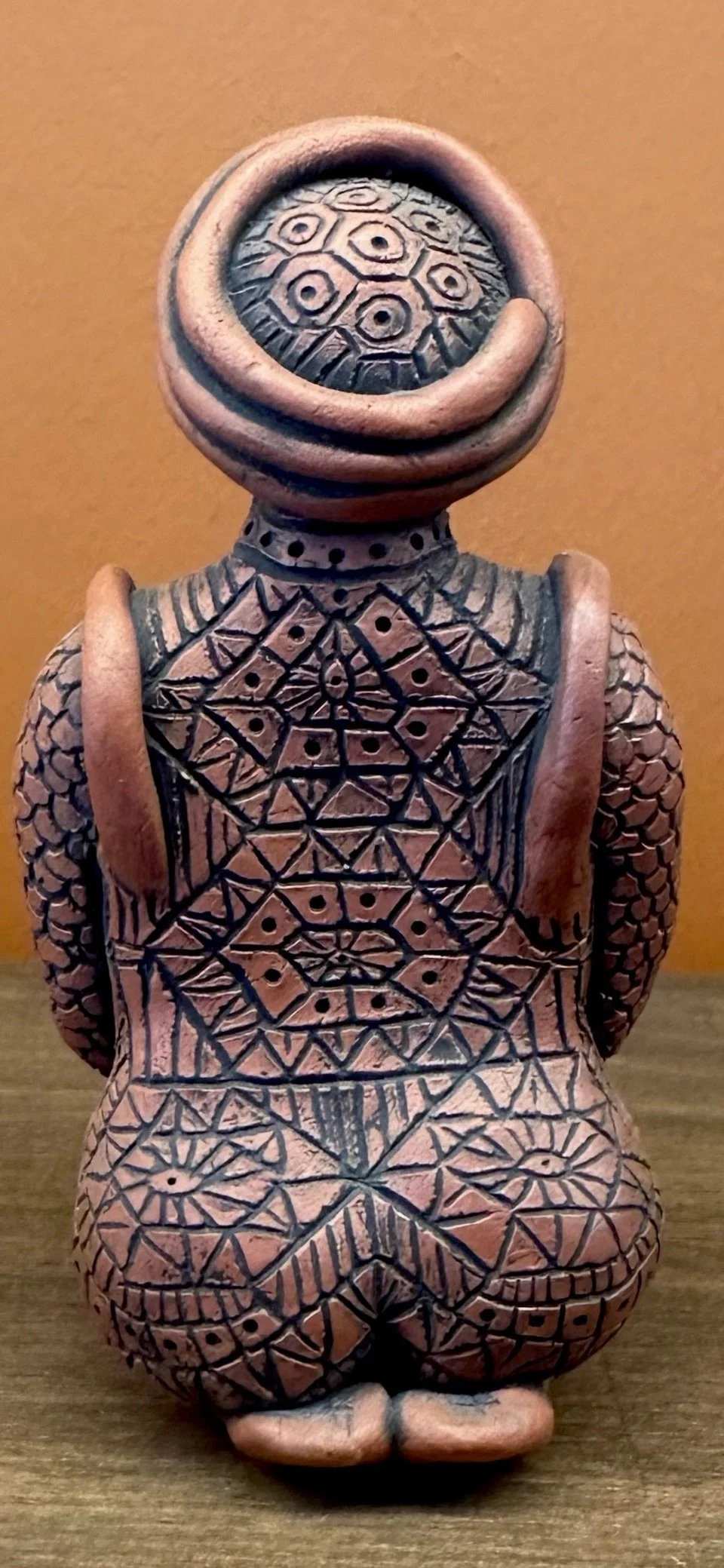
A GODDESS OF ONE’S OWN
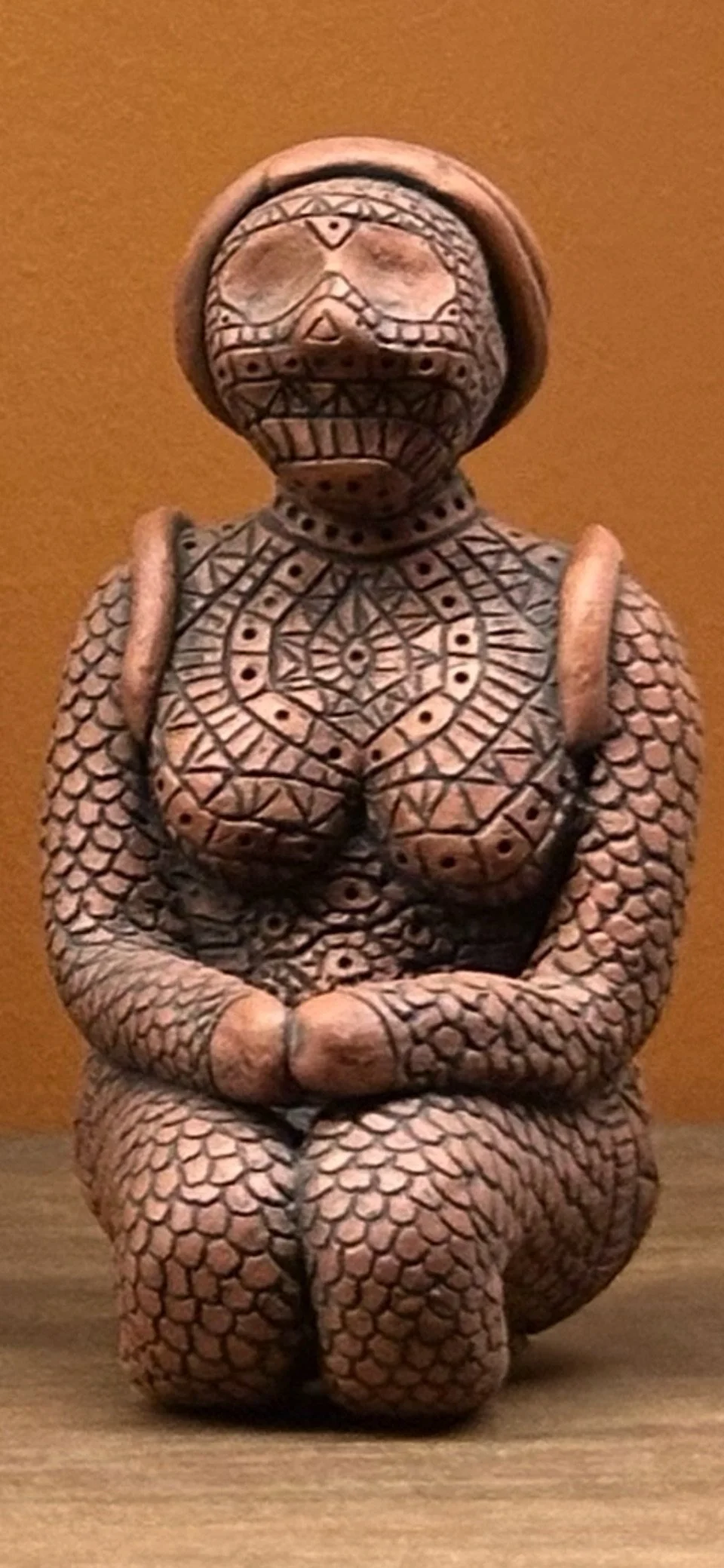
Kybele
Ceren Müftüoğlu (Turkish-American)
I first spotted Ceren Müftüoğlu’s mesmerizing Kybele sculptures on Instagram. Given her obvious Turkish name, I asked if I might visit her Istanbul studio. It turned out she lives in Philadelphia, USA! However, this launched a fascinating email correspondence.
Kybele (Cybele) is a ‘mother goddess’ whose cult began in Western Anatolia some three thousand years ago, and was later adopted by the ancient Greeks and Romans. Her predecessor, however, probably dates back 9,000 years to Çatalhöyük, a proto-city in today’s southern Turkey.
Ceren’s says her archaeological education set the stage for creating her Kybele sculptures. She further explains how this archaic symbol became a near obsession…
Clay provided a sense of calmness during a very down time in my
life. Kybele became my muse for a couple of reasons. While studying
mythology I became intrigued with the all-powerful female figures.
Then one day I had a vision of this ancient goddess, and believed she
would be a benevolent force in my life. Later, moving from Istanbul
to suburban Philadelphia was a cultural shock. Kybele represented a
re-awakening of my Turkish heritage. I credit her with saving my life.
Ceren’s Kybeles, however, often depart from the archetypical body type and pose of Çatalhöyük’s mother goddess (usually depicted sitting on a throne). According to Ceren, her arms and legs are covered with snake scales. Snakes are often regarded as guardians, consistent with Ceren’s personal mythology about Kybele.
Despite her diminutive size, I sometimes feel a power emanating from the Kybele majestically sitting on my living room bookcase.