The Pious Man & the Hoopoe
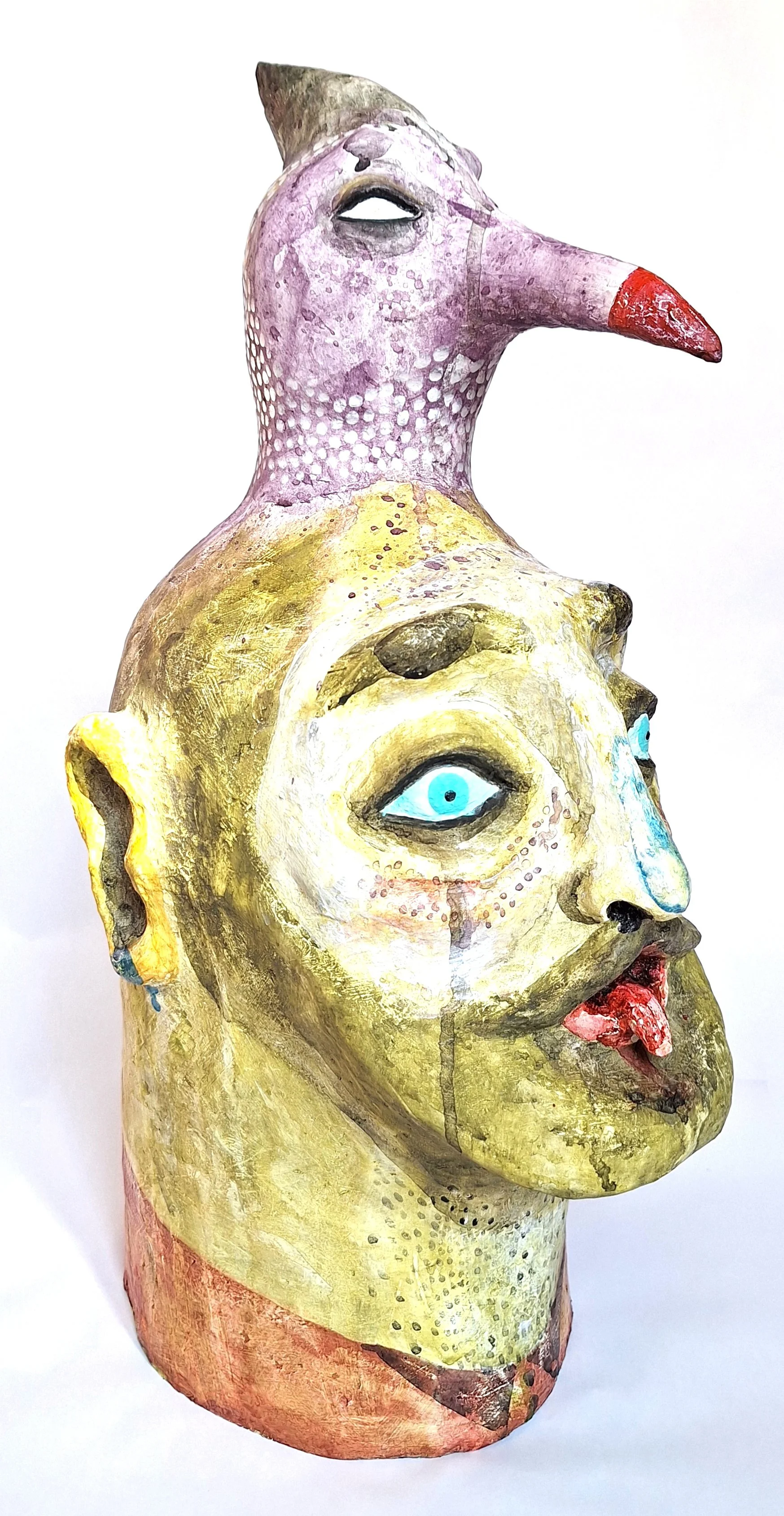
Acrylic on papier-mâché, 49 x 27 x 23 cm, 150 USD
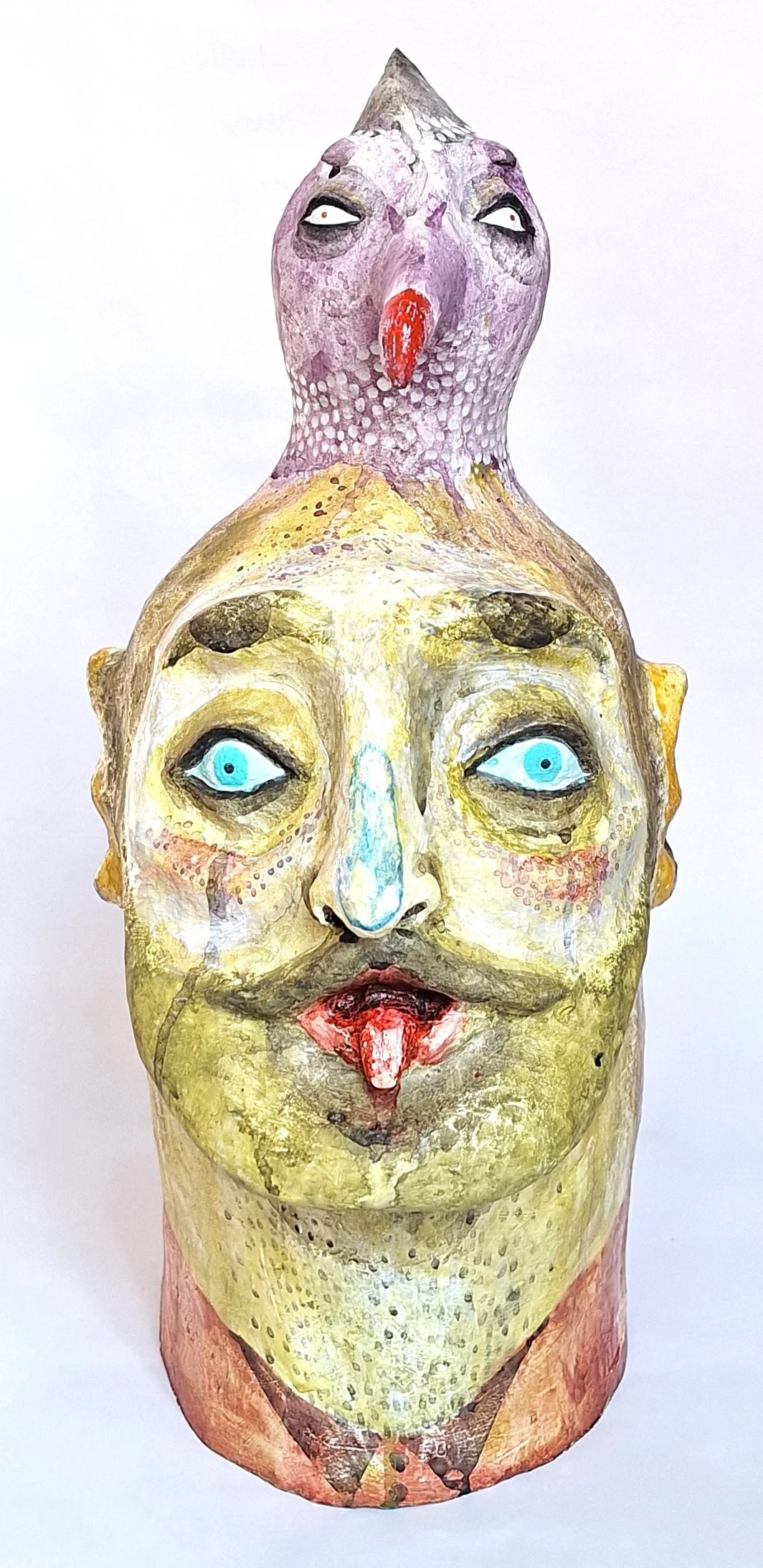
Pious Man & the Hoopoe (alternative view)
I chose this story because of its conversations between humans and animals, a characteristic feature of Eastern storytelling literature that I’m particularly fond of.
Sources
This work is inspired by and draws upon two sources: Abdol-Latif Tasuji’s edition of One Thousand and One Nights (The Arabian Nights, 1843–1844 CE)—where it appears as the story of Solomon and the Hoopoe—and the Sindbad-nameh, one of the most renowned works of Persian literature with roots in ancient Indian and pre-Islamic Iranian storytelling traditions. The hoopoe is a bird symbolizing wisdom in Iranian and Islamic traditions.
My telling of the story
There once lived a hoopoe in the region of Kabul, whose friend was a pious man. One day, perched high up in a tree, the hoopoe was feeling peace and contentment. Nearby, however, children were spreading nets and setting traps for him. Seeing the danger, the pious man warns him, “My friend, this is not a safe place. You don’t notice that children are setting traps for you.”
But the hoopoe, relying on his own cleverness, doesn’t take this advice seriously. After the children left, he descends to search for grain. Unaware of a hidden trap, he becomes caught in it.
The pious man finds his ensnared friend a little later. While freeing him, he says, “You belittled the advice of a friend and paid no attention to my warning.” Shamefully, the hoopoe replies, “When destiny arrives, eyes become blind. It is as though at the moment fate unfolds, even reason ceases to function—and there is no escape from divine decree.”
Takeaways
The most dangerous traps in life are those hidden beneath the ‘soil’ of habit, pride, and negligence.
Disregarding the advice of the wise exposes one to danger.
Fate should not be used as an excuse for one’s own faults.