
King Shahriar & his brother Shāh-Zamān
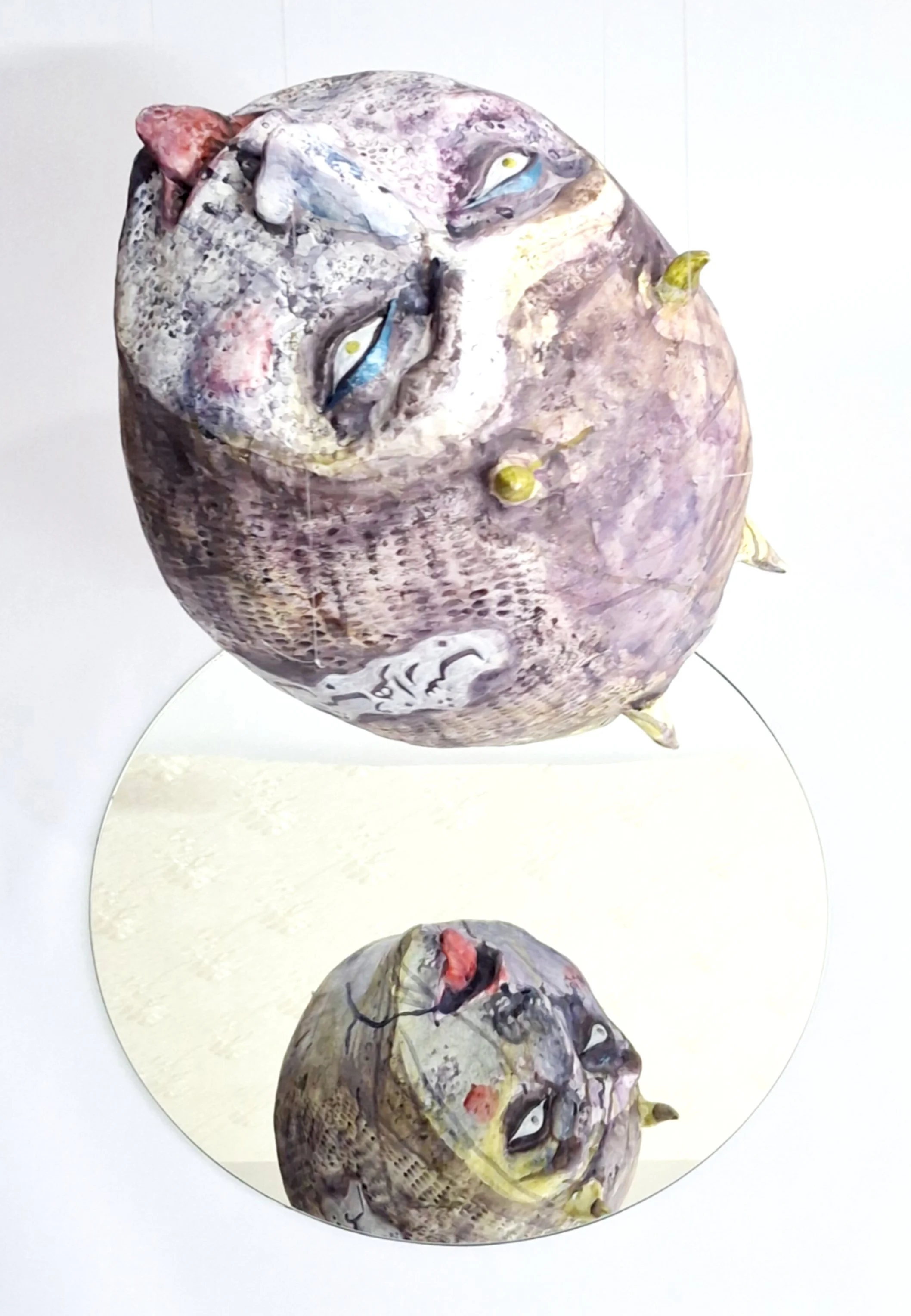
Acrylic on papier-mâché 40 × 30 × 30 cm, 150 USD
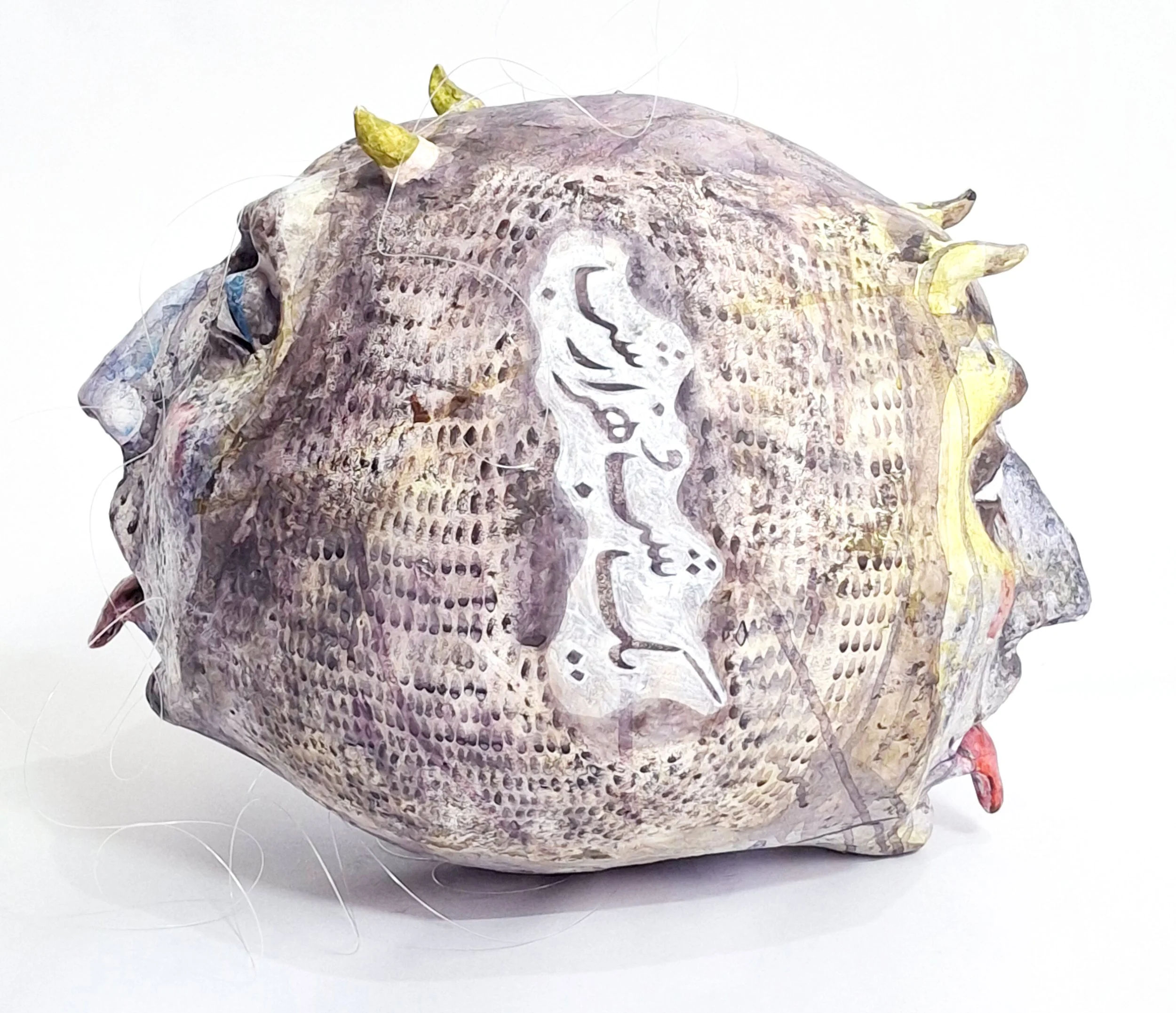
Two-Faced Jinn Persian Text on the side of his head reads: One Thousand and One Nights
Note: The mirror on which the sculpture sits in the main image symbolizes the sea in whose depths a jinn imprisoned the woman.
Though most people think One Thousand and One Nights begins with Scheherazade regaling her husband King Shahriar with nightly stories to save her life, I’d now like to tell the story of what preceded their marriage.
Source
This tale is adapted from One Thousand and One Nights (The Arabian Nights), based on Abdol-Latif Tasuji’s edition (1843–1844 CE). Jinns are supernatural beings endowed with both immense benevolent and malevolent powers, and play a central role in many One Thousand and One Nights stories.
My telling of the story
After discovering that both of their wives had betrayed them, King Shahriar and his brother Shāh-Zamān left their city and traveled across the desert until they reached the Omani coast. There, they rested by a spring. Suddenly, a very large jinn emerged from the sea with an iron chest containing a beautiful girl. The jinn then released her, and fell asleep.
Forcing the brothers to accompany her, the girl showed them a silk thread holding 570 signet rings. She explained they were mementos of the men she had had relations with despite the jinn’s strict watch. She also related how despite the fact that the jinn had abducted her on her wedding night and imprisoned her in a chest in the middle of the sea, he could not control her licentious behavior. The two brothers were deeply astonished by this, and realized misfortune and deception had not been limited to them alone. Calmer, they returned to their city.
Furious about his wife’s betrayal, King Shahriar killed her and her servants. He then decided to marry a different girl every night, and have her killed the next morning. This continued for three years, causing fear and suffering among the people. The king’s minister—who had two daughters, Donyazād and Scheherazade—became sad and worried as well.
Understanding her father’s distress, Scheherazade told him she was willing to marry the king:
She would either survive and save the people—or be killed, if that was her fate.
Takeaways
The attempt to exert absolute control over the fate of others is destined to fail.